
What 'Sale Price' Actually Means — and When It's Not a Deal
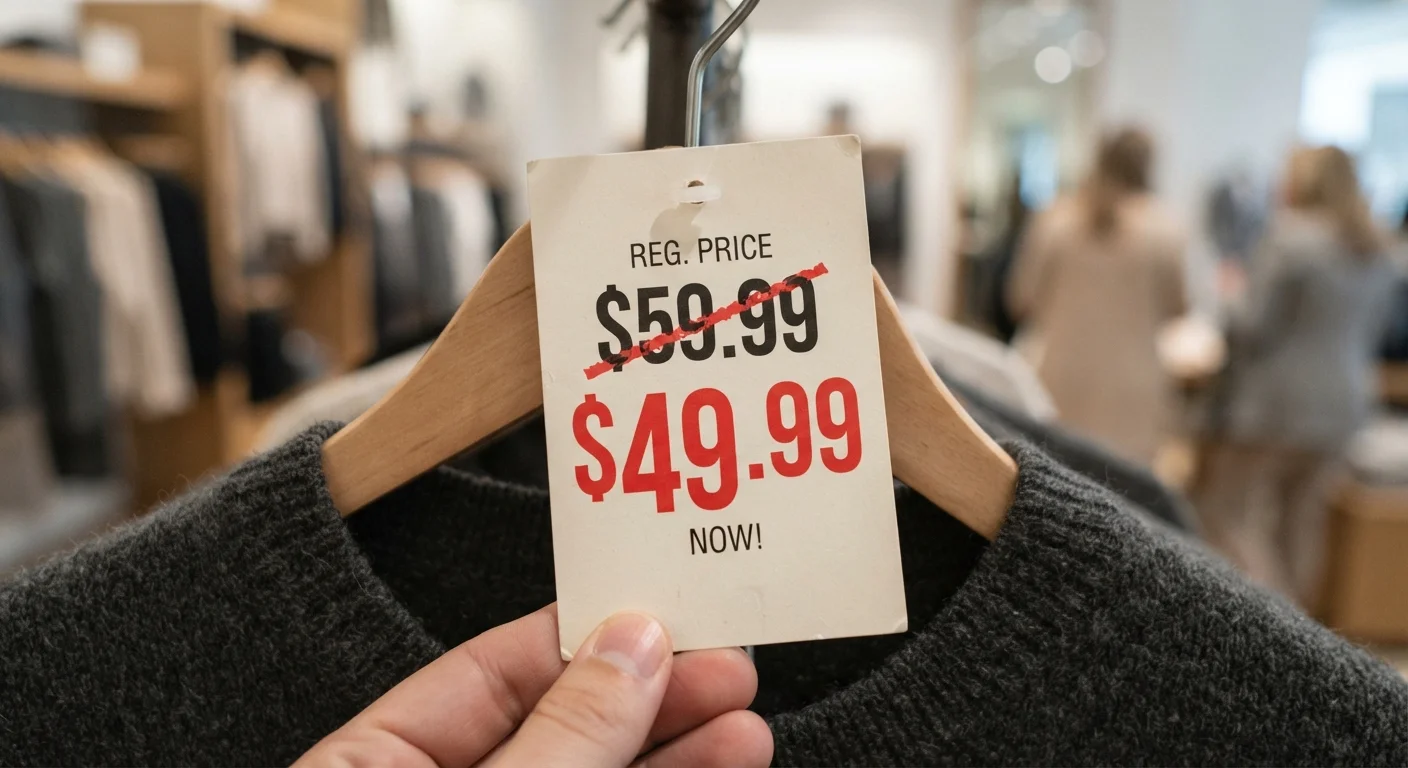
Photo credit: InGlimpse.com | Where Curiosity Finds Answers
In this article
Retailers use 'sale' in ways that don't always mean savings. Learn how reference pricing works and how to spot a genuine discount.
Key Takeaways
- A 'sale price' is only meaningful if the reference price reflects what the item genuinely sold for.
- Retailers can legally set an inflated reference price and then 'discount' it without ever selling at that price.
- Comparing prices across multiple sources before buying is the most reliable way to judge a real deal.
- Seasonal markdowns and end-of-clearance prices are generally more trustworthy than perpetual 'sale' displays.
- Price-tracking tools can reveal whether a product's 'sale' price is actually its everyday price.
How Reference Pricing Creates the Illusion of Savings
Every time you see a crossed-out price above a bold red number, you're looking at a reference pricing tactic. The crossed-out figure — sometimes labeled 'original,' 'regular,' or 'compare at' — is designed to make the current price feel like a discount. But the legitimacy of that savings claim depends entirely on whether the reference price reflects reality.
In many cases, it doesn't. A common practice involves setting a reference price well above any price the item was meaningfully sold at, then permanently displaying the lower number as a 'sale.' This is sometimes called a fictitious reference price or phantom markdown. The consumer sees a 40% discount; the retailer has simply reframed its standard price.
The 'Compare At' Label Is Not Standardized
'Compare at' pricing has no universally legal definition in the US. Retailers use it to reference competitor prices, MSRP, or their own prior prices interchangeably. Unlike a 'was' or 'original' label, 'compare at' does not imply the retailer ever sold the item at that price. Always treat it as a starting point for your own research, not confirmation of savings.
For more on the psychology behind these displays, see how retailers use psychological pricing tactics to shape purchasing decisions.
What the Rules Actually Say — and Their Limits
The Federal Trade Commission (FTC) has long-standing guidance stating that a 'former price' used as a reference must be a bona fide price — one at which the item was genuinely offered to the public for a reasonable period. If an item was priced at $100 for just two days and then 'reduced' to $70 indefinitely, that $100 reference is questionable at best.
States have their own deceptive-pricing laws, and some are stricter than federal guidance. But enforcement is uneven, and retailers often operate in gray areas. Phrases like 'compare at' are particularly loosely regulated — they may refer to a competitor's price, a manufacturer's suggested retail price (MSRP), or simply a number the retailer selected. None of these guarantee you're getting a genuine discount.
87%
Shoppers influenced by reference prices
Research in consumer behavior consistently finds that reference prices significantly shape perceived value, even when shoppers are told the reference may not reflect actual prior sales.
~33%
Black Friday 'deals' available at same price earlier
Consumer advocacy analyses have repeatedly found that a substantial portion of holiday sale items were available at the same or lower prices in the months preceding the sale event.
Practical Ways to Judge Whether a Deal Is Real
The most effective tool a shopper has is price history. Several free browser extensions and websites track how a product's price has changed over time at major retailers. If the 'sale' price has been the listed price for six months, it's not a sale — it's the price.
A few habits worth building:
- Check the price across at least two other retailers before deciding whether the reference price is plausible.
- Note how long the sale has been running. Perpetual sales are a signal that the 'sale price' is simply the everyday price.
- Treat MSRP with skepticism. Manufacturers often set MSRPs high; actual market prices are frequently lower.
- Look for clearance over 'sale.' End-of-season clearance typically reflects genuine inventory reduction, not a pricing strategy.
For a broader look at common assumptions that don't hold up, online shopping myths that cost American consumers money is worth reading before your next purchase.
Use Price-Tracking Tools Before You Buy
Free browser extensions can display the price history of a product at major retailers directly on the product page. If the current 'sale' price has been consistent for months, you're looking at the real price — not a temporary discount. This takes seconds and can prevent impulse purchases based on inflated reference figures.
When a Sale Price Actually Is a Deal
Not all sale pricing is misleading. Genuine discounts do exist — seasonal clearance, overstock reductions, and promotional events tied to real cost changes are real. The difference is usually traceable: the item was priced higher for an extended, meaningful period, and the reduction reflects an actual change in what the retailer needs to recoup.
End-of-season apparel, display models, and discontinued items are categories where sale prices more reliably reflect actual markdowns. Similarly, price drops following a newer product release — particularly in electronics — tend to be genuine because the market has shifted.
Smart shopping also means understanding when quantity deals aren't what they seem. buying in bulk when more is actually less explores how volume pricing can sometimes inflate rather than reduce your total spend.
The core habit is the same regardless of context: treat any reference price as a claim that needs verification, not a fact that earns your trust automatically.
This article is for general informational purposes only and does not constitute legal or financial advice. Pricing regulations vary by state; consult relevant consumer protection resources for guidance specific to your location.
Frequently Asked Questions

Author
Home Editorial Team
Home Editorial Team is the collective byline for our editorial team and contributor network. Articles published under this byline or an editorial pen name are researched, written, and reviewed according to our editorial standards for clarity, consistency, and independence before publication.
View all articles →