
Open Shelving vs. Closed Cabinets in the Kitchen
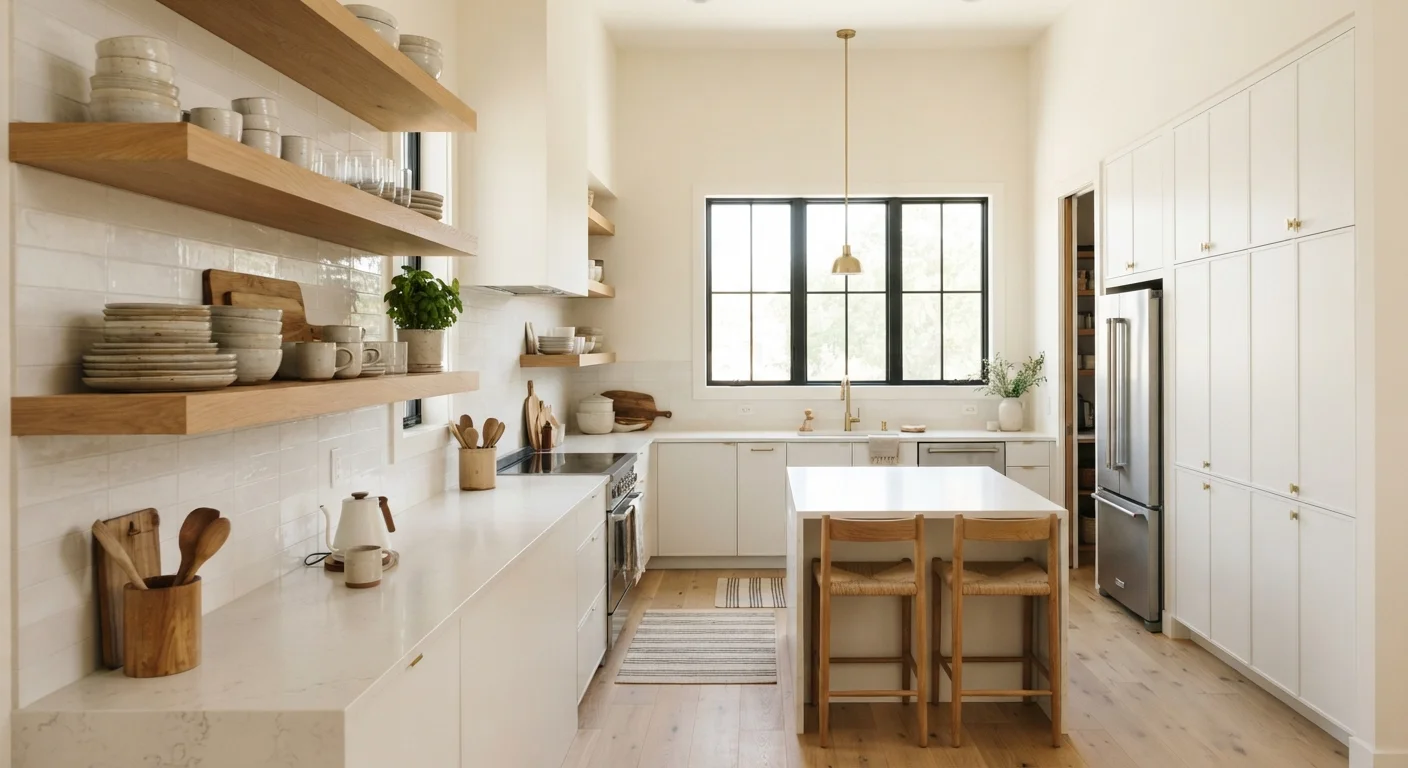
Photo credit: InGlimpse.com | Where Curiosity Finds Answers
In this article
Open shelves look great in photos but live differently in real kitchens. A side-by-side look at the practical and aesthetic trade-offs.
Key Takeaways
- Open shelving creates visual openness but requires consistent organization and more frequent cleaning.
- Closed cabinets conceal clutter effectively and protect dishes from grease, dust, and moisture.
- Open shelves can feel larger in small kitchens, but only when contents are deliberately styled.
- Cabinets typically offer more adaptable storage, including adjustable shelves, drawers, and door organizers.
- A hybrid approach — some open, some closed — is a common compromise that suits many households.
- Neither option is universally superior; the right choice depends on your habits, household, and kitchen layout.
What the Photos Don't Show You
Open shelving is one of the most photographed kitchen features in home design media. The look — stacked ceramic bowls, matching glasses, a few trailing plants — photographs beautifully. But those images represent kitchens styled for a camera, not lived in daily.
Real kitchens collect grease residue, spice dust, and the occasional errant cereal box. Open shelves put all of it on display. That's not a dealbreaker, but it is the central honest trade-off: open shelving is a design commitment, not just a storage method. If you're drawn to the aesthetic, it's worth understanding what maintaining it actually requires before you remove a single cabinet door.
Closed cabinets don't generate the same aspirational imagery, but they've remained the dominant kitchen storage choice for practical reasons. They hide the complexity of a household that cooks, bakes, and feeds people regularly. For many homeowners, that's exactly the point. As decorating myths often suggest, the most photogenic option isn't always the most livable one.
Side-by-Side: How They Actually Compare
Looking at both options across practical dimensions makes the trade-offs concrete.
| Criterion | Open Shelving | Closed Cabinets |
|---|---|---|
| Visual effect | Airy, open, display-forward | Clean, contained, visually calm |
| Maintenance frequency | Higher — weekly wiping required | Lower — periodic interior cleaning |
| Grease and dust exposure | Fully exposed | Protected behind doors |
| Storage flexibility | Limited — items must look presentable | High — accommodates any item |
| Small kitchen suitability | Good — reduces visual bulk | Moderate — can feel enclosed |
| Installation cost | Generally lower | Generally higher |
| Reversibility | Easy to add doors later | Removing doors is simple |
One nuance the table doesn't capture: how a kitchen is used matters as much as how it looks. A household that cooks elaborate meals nightly will accumulate far more grease and steam near open shelves than one that uses the kitchen mainly for quick meals. Storage needs also shift — a growing family's cabinet requirements differ substantially from a single-person household's.
The Maintenance Reality of Open Shelves
Open shelving demands a cleaning rhythm that closed cabinets simply don't. Grease particles released during cooking settle on any nearby surface — including your displayed dishes. In a kitchen where the stove sees regular use, shelves within a few feet of the range can accumulate a visible film within weeks.
Beyond grease, open shelves collect dust, require the items on them to be consistently arranged, and reveal any deviation from the curated look immediately. A single mismatched mug or a stack of take-out containers breaks the visual effect that made the design appealing in the first place.
~30 min
Weekly cleaning time for open shelves
Home organization experts generally estimate that a full set of open kitchen shelves requires 20–30 minutes of wiping and rearranging per week in an active cooking household.
60–70%
Kitchen renovations retaining upper cabinets
Industry surveys from kitchen and bath associations consistently show that the majority of kitchen remodels retain closed upper cabinet storage as the primary format.
That said, cleaning open shelves takes only minutes when done regularly. The challenge is the frequency, not the effort. If wiping down shelves once a week fits naturally into your routine, the maintenance burden is manageable. If it doesn't, the shelves will show it.
Where Closed Cabinets Have the Advantage
Cabinets aren't merely the default — they solve specific problems that open shelving can't. Door fronts create a barrier against cooking residue, keeping stored items cleaner between uses. Adjustable interior shelving accommodates bulky appliances, pantry staples, and items that don't photograph well but are essential to everyday cooking.
Closed storage also creates visual calm. When every surface competes for attention, a kitchen can feel chaotic regardless of its size. Cabinets contain that visual noise. This is particularly relevant in open-plan homes where the kitchen is visible from living or dining areas — a consideration also worth keeping in mind when thinking about decorating compact connected spaces.
The main limitation is opacity: you can't see what's stored without opening a door, which can slow down retrieval and make poorly organized cabinets frustrating to use. Interior organizers — pull-out drawers, door-mounted racks, lazy Susans — address this but add cost and complexity.
Cabinet Doors Can Be Added or Removed Later
Open shelving and closed cabinets aren't permanent commitments if your cabinet boxes are already in place. Standard cabinet doors can be removed to create open shelving, or added to open shelves with the right hardware. If you're unsure which approach suits your household, starting with one section and evaluating it over a few months is a low-risk way to find out before committing to a full kitchen redesign.
The Hybrid Approach: A Workable Middle Ground
Most kitchen designers note that homeowners don't have to choose one approach exclusively. A common solution is to keep closed cabinets for lower storage and high-traffic zones near the stove, while incorporating a few open shelves in lower-demand areas — a corner, a single wall section, or above a window — for display purposes.
This lets you enjoy the aesthetic benefits of open shelving without exposing your entire kitchen's contents to daily cooking residue. It also gives you flexibility: if the open shelves feel unmanageable after a year, adding cabinet doors is straightforward. If you want more open storage, removing cabinet doors costs almost nothing.
If you're drawn to the idea of a more streamlined, intentional kitchen, it's worth reading the honest case for minimalist home decor — the same tensions between aspiration and everyday practicality apply directly here.

Author
Home Editorial Team
Home Editorial Team is the collective byline for our editorial team and contributor network. Articles published under this byline or an editorial pen name are researched, written, and reviewed according to our editorial standards for clarity, consistency, and independence before publication.
View all articles →