
Energy Star Ratings Explained: What the Labels on Your Appliances Actually Mean
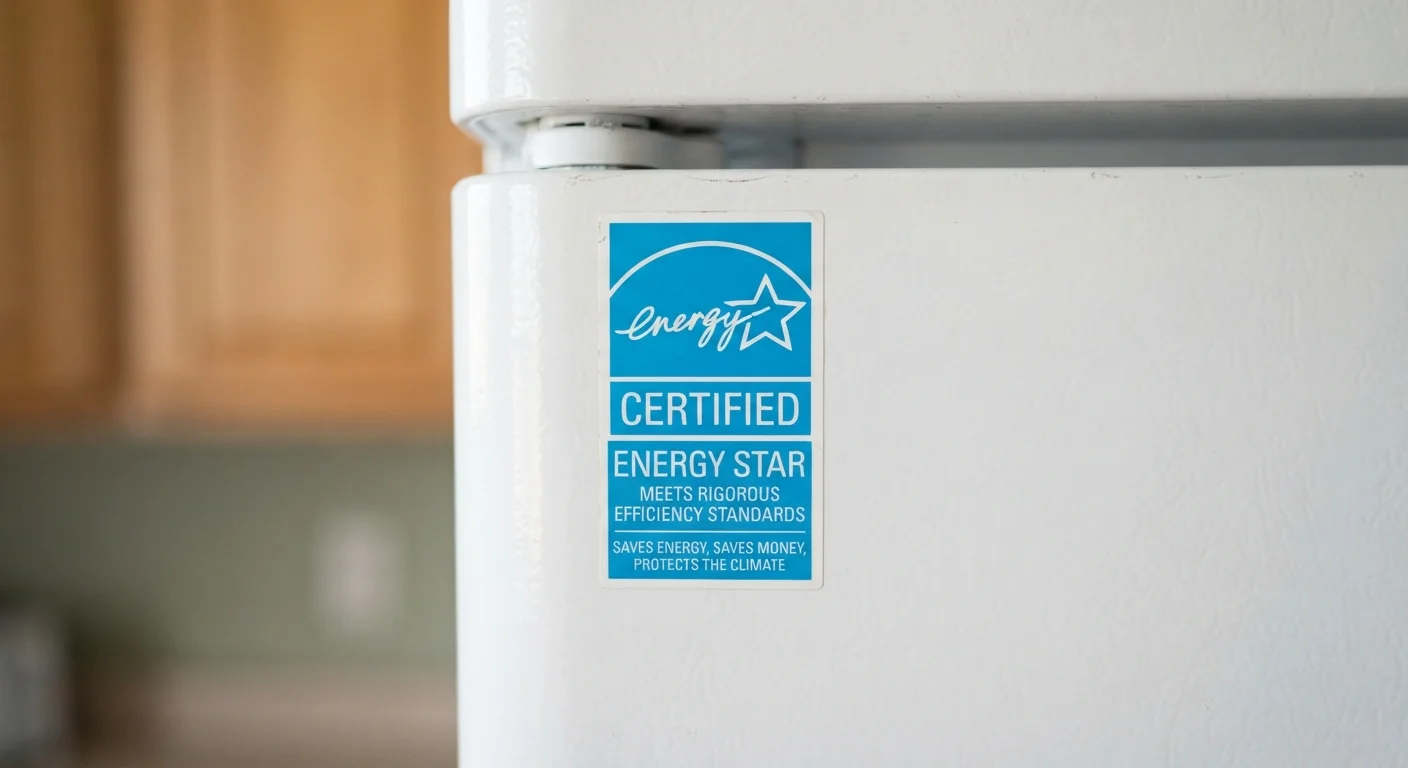
Photo credit: InGlimpse.com | Where Curiosity Finds Answers
In this article
Energy Star labels can be confusing. Learn what efficiency ratings mean, how they're measured, and why they matter for your utility bills.
Key Takeaways
- Energy Star is a federal program run by the EPA, not a private rating system.
- Certification standards differ by product type — a label on a refrigerator means something different from one on a laptop.
- The yellow EnergyGuide label (separate from Energy Star) shows estimated annual energy cost for direct comparison shopping.
- Energy Star certified products typically use 10–50% less energy than non-certified alternatives, depending on the category.
- Certification requires third-party testing, not just manufacturer self-reporting.
Two Labels, Two Jobs: Energy Star vs. EnergyGuide
Most people use "Energy Star" as a catch-all term for appliance efficiency labels, but there are actually two distinct labels you'll encounter — and they serve different purposes.
The Energy Star label is a blue-and-white badge that functions like a pass/fail stamp. It tells you a product has met or exceeded the EPA's current efficiency threshold for its category. You either see it or you don't.
The EnergyGuide label is the large yellow tag the Federal Trade Commission requires on most major appliances — refrigerators, dishwashers, washing machines, water heaters, and similar products. Instead of pass/fail, it gives you a spectrum: the appliance's estimated annual energy use in kilowatt-hours (kWh) and an estimated yearly operating cost based on national average electricity rates. A scale on the label shows where the model falls relative to the least and most efficient similar models currently on the market.
These two labels can appear on the same appliance simultaneously. When that happens, it means the product cleared the efficiency bar and gives you a way to compare its running costs to other options in the same category. Just like reading a complex label takes practice — similar to decoding a nutrition facts panel — understanding what each element tells you makes the information far more useful.
10–50%
Typical energy savings vs. non-certified models
According to the EPA, Energy Star certified products generally use 10 to 50 percent less energy than standard alternatives, with the range varying by product category.
75+
Product categories covered by Energy Star
The EPA's Energy Star program spans more than 75 distinct product categories, including appliances, HVAC systems, lighting, electronics, and commercial equipment.
$500+
Estimated average annual household savings
The EPA has estimated that a home fully outfitted with Energy Star certified products can save several hundred dollars annually on utility bills compared to non-certified equivalents, though actual amounts vary by household.
How the Certification Threshold Is Set — and Why It Changes
Energy Star specifications are not static. The EPA sets thresholds at a level only the top-performing fraction of products in a category can meet, which means the bar rises over time as the overall market improves. A refrigerator that earned certification a decade ago might not qualify under today's standards.
The process for setting a new specification typically involves market analysis, stakeholder input from manufacturers and efficiency advocates, and review periods before finalization. Once a spec is published, manufacturers must have their products tested by an EPA-recognized, accredited third-party laboratory — not just self-certify — before they can display the label.
The EPA also conducts what it calls "off-the-shelf" verification testing: buying certified products from regular retail channels and retesting them in independent labs. Products that fail post-market verification can be removed from the certified list.
Check the Certified Products List Before You Shop
The EPA maintains a searchable database of all currently certified Energy Star products at energystar.gov. Checking it before you shop lets you verify that a product's certification is current — not just that it carried the label at some point in the past. Specifications are updated regularly, and older models can be decertified when standards rise.
One practical implication: if you're comparing two appliances and only one carries the Energy Star label, the certified model met a documented, independently verified standard. That's useful information, even if it doesn't tell you the whole operating cost story on its own.
Reading the Numbers: What Efficiency Metrics Actually Measure
Different appliance categories use different efficiency metrics, which is why a single number rarely tells the full story.
- Refrigerators and freezers are rated on annual kWh consumption. Lower is better.
- Dishwashers use an Energy Factor (EF) or, in more recent specs, a combination of energy and water consumption metrics.
- Clothes washers are rated using Integrated Modified Energy Factor (IMEF) — a measure that accounts for machine energy, hot water heating, and dryer energy required to remove residual moisture.
- Central air conditioners and heat pumps use SEER2 (Seasonal Energy Efficiency Ratio) for cooling and HSPF2 for heating. Higher numbers mean better efficiency.
- Water heaters use Uniform Energy Factor (UEF), a standardized measure of how efficiently a unit converts energy into hot water across a simulated usage pattern.
These metrics are set up for comparison within a category, not across categories. A high SEER2 rating tells you how an air conditioner performs relative to other air conditioners — it doesn't translate to refrigerator efficiency. Keeping that boundary in mind helps you use the numbers accurately. For more context on how labels in other domains work, the same interpretive discipline applies when decoding a credit score — each number only makes sense within its own measurement framework.
What Efficiency Ratings Don't Tell You
Energy Star certification and EnergyGuide estimates are based on standardized test conditions — not your household's actual usage patterns. Several real-world factors can shift your actual operating costs significantly.
Usage frequency and load size matter enormously. A dishwasher run twice a day costs more to operate than the same model run every other day, regardless of its efficiency rating.
Local electricity rates vary widely across the US. The cost estimate on a EnergyGuide label is based on a national average rate. If your utility charges significantly more or less, your actual annual cost will differ accordingly.
Installation and maintenance affect real-world performance. An efficient heat pump installed in an undersized space, or a refrigerator with a dirty condenser coil, won't perform at rated levels.
Understanding these limits helps set realistic expectations. Efficiency ratings are a reliable comparative tool at the point of selection — they work best when used to narrow choices, not as a promise of a specific outcome. For more grounded perspective on appliance decisions, common appliance shopping myths are worth reviewing before you commit to a purchase. If you're looking to build on this foundation, practical approaches to reducing appliance energy use covers what you can do after the purchase is made.
Frequently Asked Questions

Author
Home Editorial Team
Home Editorial Team is the collective byline for our editorial team and contributor network. Articles published under this byline or an editorial pen name are researched, written, and reviewed according to our editorial standards for clarity, consistency, and independence before publication.
View all articles →