
Debt Settlement and Its Long Shadow on Your Credit Report
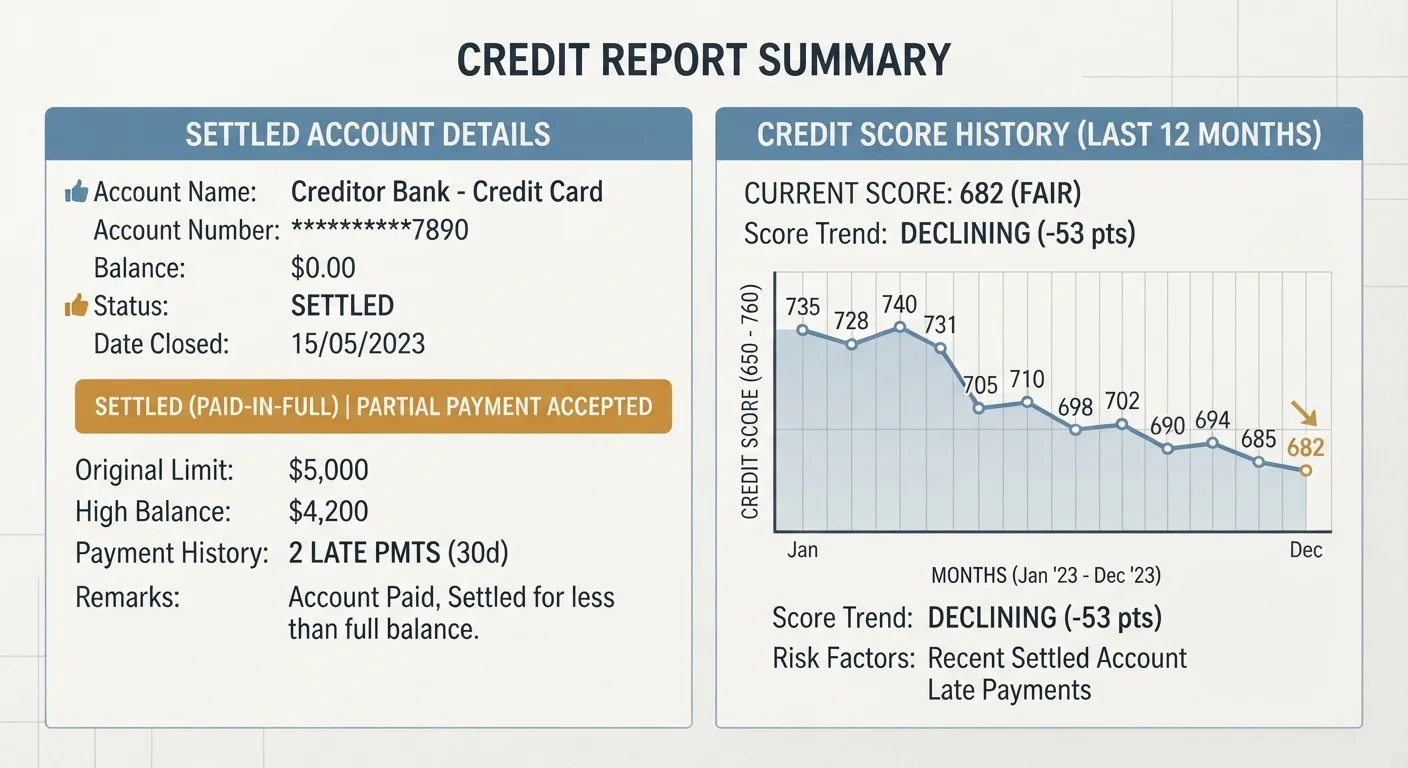
Photo credit: InGlimpse.com | Where Curiosity Finds Answers
In this article
Settling a debt for less than owed may seem like a win, but its credit consequences are significant and often misunderstood. Here's what actually happens.
Key Takeaways
- Settled debts are reported as 'settled for less than the full amount,' which damages your credit score.
- A settled account can remain on your credit report for up to seven years from the date of first delinquency.
- Forgiven debt may be considered taxable income by the IRS — consult a tax professional.
- Debt settlement is generally a last resort, not a routine debt management strategy.
- Alternatives like debt consolidation or negotiated repayment plans may carry fewer credit consequences.
What Debt Settlement Actually Means
Debt settlement sounds straightforward: you owe $10,000, you pay $5,000, and the creditor calls it even. In reality, the process is more complex — and the tradeoffs more significant — than that simple math suggests.
Settlement typically becomes an option only after an account has fallen seriously delinquent, often 90 to 180 days past due. Creditors or the debt collectors they sell accounts to may then agree to accept a reduced lump-sum payment rather than risk collecting nothing. The debt is resolved in a transactional sense, but the credit report tells a different story.
For broader context on how credit and debt interact from the ground up, see the comprehensive credit and debt resource that covers these concepts end to end.
Settlement Is Not the Same as Paying in Full
A common misconception is that once a settlement is paid, the slate is wiped clean. That is not how credit reporting works. 'Settled' and 'paid in full' are distinct statuses, and lenders — particularly mortgage lenders — will scrutinize the difference. Some lenders may decline applicants or charge higher rates based solely on the presence of settled accounts, even years after the fact.
How Settlement Appears on Your Credit Report
When a creditor reports a settled account to the three major credit bureaus — Equifax, Experian, and TransUnion — it typically appears with a status of "settled" or "settled for less than the full amount." This distinction matters enormously to lenders and credit scoring algorithms.
Under the FICO scoring model, a settled account is viewed as a derogatory mark. It signals that you did not fulfill your original obligation. While it is treated less severely than an unresolved charge-off or a judgment, it still represents a breach of the original credit agreement and will reduce your score — often significantly.
Equally important: the seven-year clock on that negative mark starts from the date of first delinquency, not the date of the settlement. If you missed your first payment two years before settling, the mark may disappear sooner than you think — but the damage during those years is real.
7 years
How long a settled account stays on your credit report
Under the Fair Credit Reporting Act (FCRA), most negative credit information, including settled debts, may remain on a credit report for up to seven years from the date of first delinquency.
$600+
Threshold for IRS debt cancellation reporting
Creditors are generally required to issue a Form 1099-C to both the borrower and the IRS when $600 or more in debt is forgiven, potentially creating a taxable income event.
100+ points
Potential credit score drop from debt settlement
According to credit scoring experts, settling a debt for less than the full amount — combined with preceding delinquencies — can lower a credit score by 100 points or more, depending on the starting score and account history.
The Tax Consequence Most People Miss
One of the most overlooked consequences of debt settlement is its potential tax impact. The IRS generally treats forgiven debt as ordinary income. If a creditor cancels $5,000 of a $10,000 balance, you may owe income taxes on that $5,000 difference.
Creditors are required to send a Form 1099-C (Cancellation of Debt) when forgiven amounts exceed $600. Exceptions exist — including an insolvency exemption for borrowers whose total liabilities exceeded total assets at the time of settlement — but these require documentation and professional guidance.
This is a critical reason to consult a tax professional before finalizing any settlement agreement, not after.
Get Any Settlement Agreement in Writing
Before making a settlement payment, obtain a written agreement from the creditor or collector that specifies the settlement amount, confirms it satisfies the full debt, and states how they will report it to the credit bureaus. Verbal agreements are difficult to enforce, and without documentation, you have little recourse if the account is later reported incorrectly.
Settlement Versus Other Options
Debt settlement is generally considered a last resort, and for good reason. Other strategies may resolve debt with less permanent credit damage.
- Debt consolidation combines multiple obligations into one loan, ideally at a lower interest rate, without reducing principal. It leaves accounts in good standing if payments are made consistently. See how it compares in our look at debt consolidation and when it makes sense.
- Negotiated repayment plans with original creditors — sometimes called hardship plans — can reduce interest rates or waive fees without triggering a settled status on your report.
- Bankruptcy, while severe, provides legal protection and structured relief. Compare the paths in our explanation of Chapter 7 vs. Chapter 13 bankruptcy.
If your credit report already shows negative marks from debt problems, separately understand your rights around disputing errors on your credit report — inaccurate entries can sometimes be corrected even when legitimate derogatory marks cannot.
This article is for general informational and educational purposes only and is not financial, legal, or tax advice. Consult a licensed financial adviser, attorney, or tax professional regarding your specific circumstances.
Frequently Asked Questions

Author
Finance Editorial Team
Finance Editorial Team is the collective byline for our editorial team and contributor network. Articles published under this byline or an editorial pen name are researched, written, and reviewed according to our editorial standards for clarity, consistency, and independence before publication.
View all articles →