
Chapter 7 vs. Chapter 13 Bankruptcy: Key Differences Explained
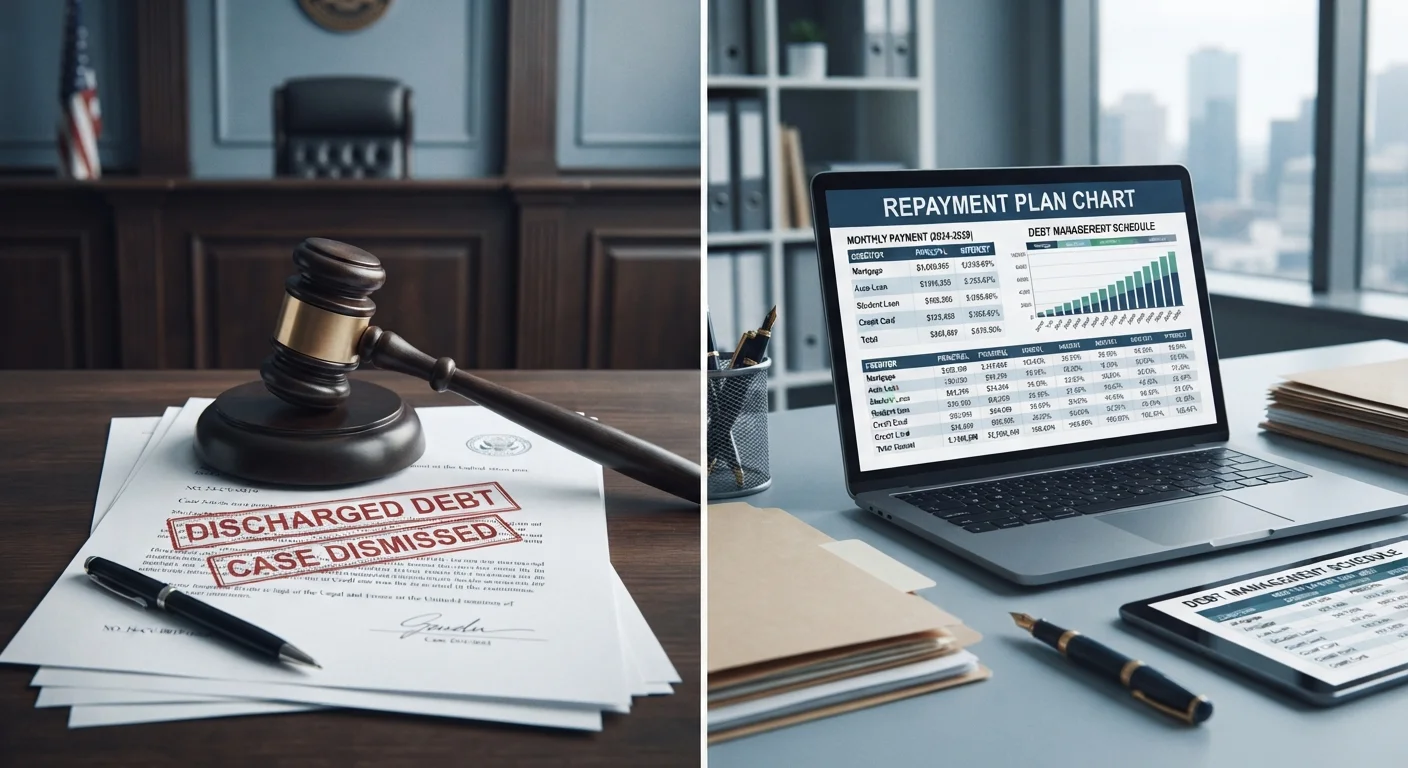
Photo credit: InGlimpse.com | Where Curiosity Finds Answers
In this article
Bankruptcy is a legal process with two common personal paths. Understand what distinguishes Chapter 7 from Chapter 13 and how each affects your credit long term.
Key Takeaways
- Chapter 7 eliminates most unsecured debts within a few months; Chapter 13 restructures debt into a 3–5 year repayment plan.
- Chapter 7 stays on your credit report for 10 years; Chapter 13 remains for 7 years from the filing date.
- Chapter 7 requires passing a means test based on income; Chapter 13 requires a reliable income to fund the repayment plan.
- Neither bankruptcy type erases student loans, most taxes, alimony, or child support obligations.
- Consulting a bankruptcy attorney is strongly recommended before filing either type.
What Bankruptcy Actually Does
Bankruptcy is a federal legal process that allows individuals overwhelmed by debt to either eliminate or restructure what they owe under court supervision. It is not a personal failure — it is a legal tool designed to give people a structured path forward when debt becomes unmanageable.
For individual consumers, two chapters of the U.S. Bankruptcy Code are most commonly used: Chapter 7 (often called "liquidation bankruptcy") and Chapter 13 (called "reorganization bankruptcy"). Both trigger an automatic stay, which immediately halts most collection actions, wage garnishments, and foreclosure proceedings the moment you file.
However, their mechanics, eligibility requirements, timelines, and long-term credit impacts differ significantly. Understanding those differences is essential before making any decisions. This article provides general educational information — not legal advice. Always consult a licensed bankruptcy attorney for guidance specific to your circumstances.
For readers weighing other debt strategies before considering bankruptcy, our comprehensive credit and debt resource offers a broader overview of available options.
Chapter 7: Liquidation and a Fresh Start
Chapter 7 bankruptcy discharges — meaning legally eliminates — most unsecured debts, including credit card balances, medical bills, and personal loans. The process typically concludes within three to six months, making it the faster of the two paths.
The trade-off is asset exposure. A court-appointed trustee may sell non-exempt assets to partially repay creditors. Federal and state exemption laws protect certain property — commonly a portion of home equity, a vehicle up to a set value, and basic household goods — but anything above those thresholds may be liquidated.
To qualify, filers must pass a means test that compares their income to the median income for their state. Those earning above that median must demonstrate that, after allowable expenses, they have insufficient disposable income to repay debts. This gatekeeping function ensures Chapter 7 is reserved for those who genuinely cannot service their debts.
~67%
Share of personal bankruptcies that are Chapter 7
According to U.S. Courts data, Chapter 7 filings consistently represent the majority of non-business bankruptcy cases annually.
7 vs. 10 years
Credit report duration: Chapter 13 vs. Chapter 7
Under the Fair Credit Reporting Act, Chapter 13 is removed from credit reports three years sooner than Chapter 7.
Chapter 7 does not eliminate all obligations. Student loans, most federal and state taxes, alimony, child support, and debts arising from fraud or criminal acts generally survive discharge.
Chapter 13: Restructure, Repay, and Retain
Chapter 13 allows filers to keep their assets while repaying a portion — or all — of their debts through a court-approved plan lasting three to five years. Monthly payments are made to a trustee, who distributes funds to creditors according to the plan's priority structure.
This structure makes Chapter 13 particularly valuable for homeowners facing foreclosure. By filing, a borrower can stop foreclosure proceedings and use the repayment plan to catch up on missed mortgage payments over time — something Chapter 7 cannot accomplish.
Eligibility for Chapter 13 requires a regular, reliable income sufficient to fund the proposed plan. There are also debt limits: as of recent federal guidelines, filers must fall below specified thresholds for secured and unsecured debt (these figures are periodically adjusted, so verify current limits with a bankruptcy attorney).
Consider Credit Counseling Before Filing
Federal law requires that bankruptcy filers complete an approved credit counseling course within 180 days before filing. Many filers find that this counseling step — though mandatory — also surfaces alternatives worth exploring. A nonprofit credit counselor can help you assess whether bankruptcy is truly the most appropriate route, or whether a debt management plan might suffice.
Because Chapter 13 involves a multi-year commitment, it demands sustained financial discipline. Missing plan payments can result in case dismissal, eliminating the protections the filing provided.
Readers who have explored options like debt consolidation or structured repayment strategies without success may find Chapter 13's court-supervised framework a more enforceable alternative.
Comparing the Two Chapters Side by Side
The table below summarizes the core distinctions between Chapter 7 and Chapter 13 across the criteria that matter most to consumers considering bankruptcy.
| Chapter 7 | Chapter 13 | |
|---|---|---|
| Common name | Liquidation bankruptcy | Reorganization bankruptcy |
| Typical timeline | 3–6 months | 3–5 year repayment plan |
| Eligibility requirement | Must pass means test (income-based) | Must have regular income; debt limits apply |
| Asset protection | Non-exempt assets may be liquidated | Assets generally retained if plan is completed |
| Foreclosure protection | Delays foreclosure; cannot cure arrears | Can cure mortgage arrears over plan period |
| Credit report duration | 10 years from filing date | 7 years from filing date |
| Debts discharged | Most unsecured debts eliminated | Remaining eligible debts discharged after plan |
One distinction worth emphasizing: the credit-report timeline. Chapter 7 remains on a credit report for 10 years from the filing date, while Chapter 13 is removed after 7 years. The shorter reporting window for Chapter 13 reflects the fact that the filer made an effort to repay creditors rather than discharging debts outright. That said, both significantly affect creditworthiness during the reporting period.
It's also worth comparing bankruptcy's credit impact against alternatives. Debt settlement causes serious credit damage and remains on reports for seven years — without the legal protections bankruptcy provides.
Rebuilding Credit After Bankruptcy
Filing for bankruptcy is not the end of your credit story. Many filers begin rebuilding credit within months of discharge or plan approval. The foundational steps align with broadly recognized credit-building principles: open a secured credit card or credit-builder loan, keep utilization low, and pay every bill on time without exception.
FICO scoring models — the most widely used credit scoring framework — do weigh recent activity more heavily than older negative marks. Over time, the practical impact of bankruptcy on credit scores diminishes, particularly if positive payment history accumulates consistently afterward.
Watch for Post-Bankruptcy Lending Restrictions
A bankruptcy on your record affects more than your credit score — it can influence rental applications, certain employment screenings, and insurance underwriting in some states. Mortgage lenders typically impose mandatory waiting periods before approving applicants post-bankruptcy. Factor these downstream consequences into your planning timeline when evaluating bankruptcy as a debt resolution strategy.
The bankruptcy public record entry, however, remains visible to lenders for the full statutory period regardless of score improvements. Some lenders impose waiting periods — often two to four years for conventional mortgages — before approving applicants with a recent bankruptcy. Planning for these timelines is an important part of post-bankruptcy financial recovery.
This article is for general informational and educational purposes only and does not constitute legal, financial, or tax advice. Bankruptcy law is complex and highly fact-specific. Consult a licensed bankruptcy attorney and, where appropriate, a qualified financial adviser before making any decisions about your situation.

Author
Finance Editorial Team
Finance Editorial Team is the collective byline for our editorial team and contributor network. Articles published under this byline or an editorial pen name are researched, written, and reviewed according to our editorial standards for clarity, consistency, and independence before publication.
View all articles →