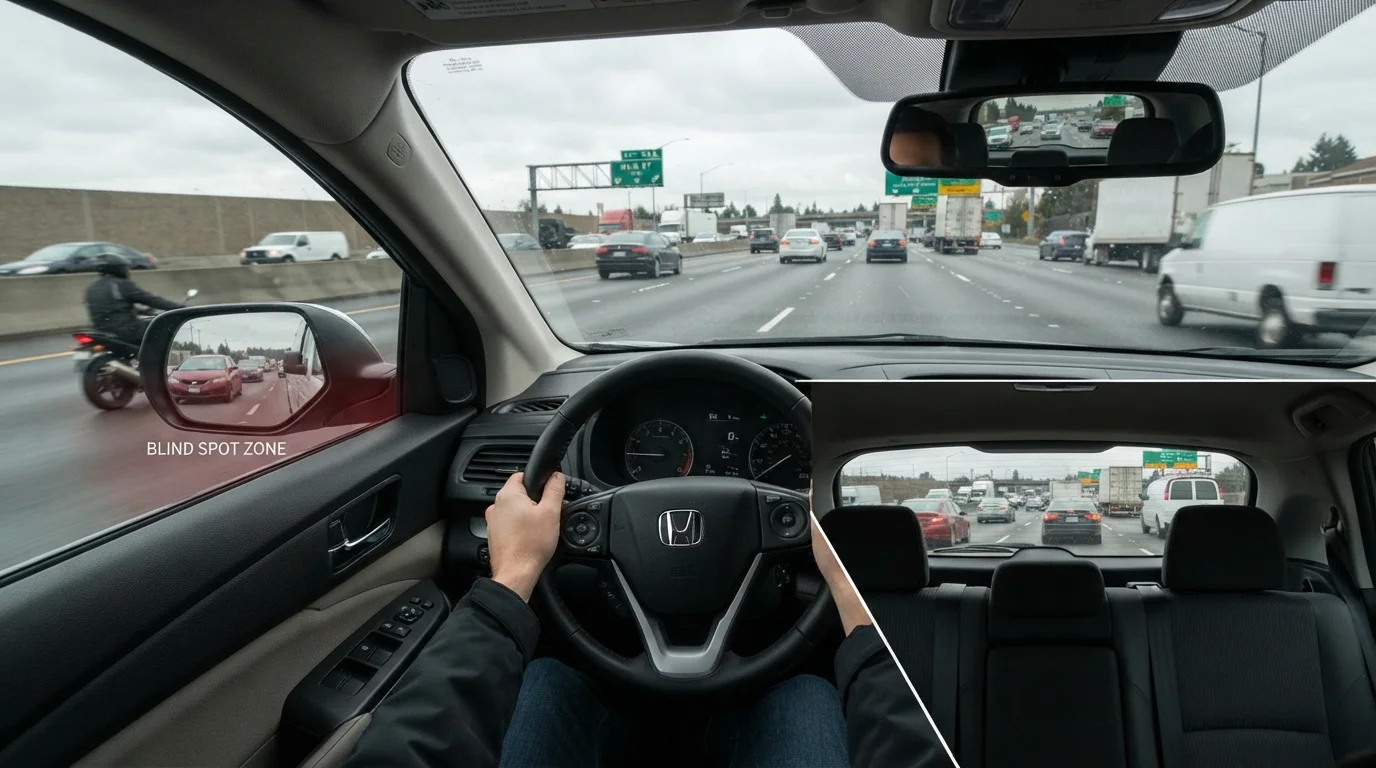
Hydroplaning: Why Wet Roads Are More Dangerous Than They Look
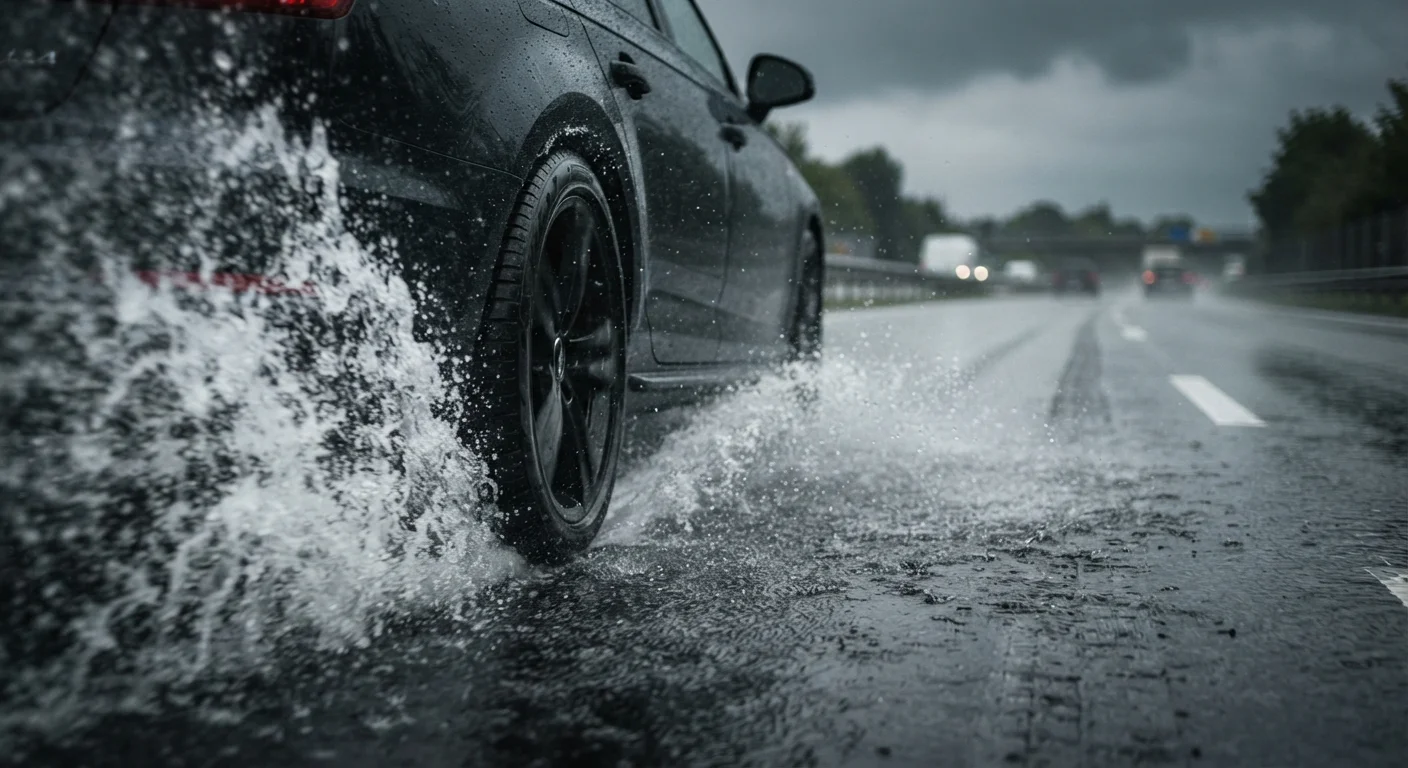
Photo credit: InGlimpse.com | Where Curiosity Finds Answers
In this article
Learn what causes a vehicle to hydroplane, how to recognize the early signs, and what to do if it happens to you.
Key Takeaways
- Hydroplaning can occur at speeds as low as 35 mph on a wet road.
- Worn tire tread is one of the biggest risk factors for losing traction in wet conditions.
- Easing off the gas — not slamming the brakes — is the correct first response.
- Cruise control should never be used in wet conditions.
- Standing water in road dips and curves carries the highest hydroplaning risk.
- Proper tire inflation and regular tread checks are your best preventive tools.
What Actually Happens When You Hydroplane
Your tires stay connected to the road through friction — that constant grip is what allows you to steer and stop. In dry conditions, this is straightforward. In wet conditions, your tires rely on tread channels to push water aside so the rubber can maintain contact with the pavement underneath.
When water accumulates faster than those channels can expel it, a wedge of water forms under the tire. At that point, the tire lifts off the road surface and begins riding on the water layer instead. Steering inputs stop translating to the wheels. Braking becomes largely ineffective. The vehicle goes where physics takes it, not where you direct it.
The sensation is often described as the steering wheel going suddenly light or the vehicle feeling like it's floating. Some drivers also notice the engine revving up unexpectedly, since the driven wheels are no longer resisting the road surface.
ABS Does Not Prevent Hydroplaning
Anti-lock braking systems (ABS) are designed to prevent wheel lockup during hard braking — they help you maintain steering control while stopping on pavement that has grip. ABS cannot restore traction when tires have lost contact with the road surface entirely. Do not rely on it as a safety net in wet conditions.
The Conditions That Make It More Likely
Several factors combine to create a hydroplaning risk — and understanding them helps you recognize when to back off your speed.
- Speed: The faster you go, the less time tires have to channel water away. Risk rises notably above 35 mph on wet roads and increases sharply at highway speeds.
- Tire tread depth: Tread that's worn below 2/32 of an inch provides minimal water-channeling capacity. Even tires at 4/32 of an inch offer noticeably less protection than new tires. Check your tread regularly — the car maintenance basics covering your tires are among the most safety-critical tasks you can stay on top of.
- Tire pressure: Underinflated tires have a smaller, distorted contact patch and reduced ability to push water aside efficiently.
- Road surface: Smooth, older pavement holds water more readily than textured road surfaces. Painted lane markings are particularly slick when wet.
- Water depth: Even a quarter inch of standing water is enough to trigger hydroplaning at speed. Low spots, road dips, and the outside lanes of curved highways — where water drains toward the edges — are the highest-risk zones.
Use the Penny or Quarter Test Regularly
Stick a quarter into your tire's tread groove with Washington's head pointing in. If the top of his head is visible, your tread depth is at or near the point where wet-weather grip drops off sharply. Monthly checks take under two minutes and can flag a safety issue before it becomes a crisis.
How to Respond When It Happens
The instinct to hit the brakes hard is understandable but counterproductive. Hard braking during hydroplaning can lock up the wheels (or overwhelm the ABS system) and send the vehicle into a spin. Here's what to do instead:
- Ease off the accelerator smoothly. Reducing power allows the tires to slow gradually and increases the chance of regaining contact with the road.
- Hold the steering wheel steady and keep it pointed in your intended direction of travel. Avoid jerking the wheel.
- Do not brake hard. If you must brake, apply gentle, steady pressure. Vehicles with ABS can handle firmer pressure than those without, but smooth is still better.
- Wait for traction to return. Once the tires regain contact, you'll feel the steering weight come back. Only then should you steer to correct your position.
Speed is the single biggest variable you control. Slowing down in wet conditions — especially in heavy rain, on highways, or on roads you know pool water — dramatically reduces the likelihood of hydroplaning in the first place. Our breakdown of highway vs. city driving risks explains why wet-weather speed management differs across road types.
Prevention: What You Can Do Before You Drive
Reactive techniques matter, but prevention is far more effective. The most impactful steps happen before you ever turn the key in wet weather.
Check your tire tread. Use the quarter test: insert a quarter into the tread groove with Washington's head facing down. If you can see all of his head, your tread is low enough to warrant attention. A qualified mechanic can give you a precise measurement. Good tire condition is the most direct defense against hydroplaning — it's worth prioritizing alongside the other routine vehicle maintenance checks that keep you safe.
Maintain correct tire pressure. Check your owner's manual or the sticker inside the driver's door jamb for the manufacturer's recommended PSI. Pressure should be checked monthly and after significant temperature swings.
Turn off cruise control in rain. Cruise control is designed to maintain a set speed. If your vehicle begins to hydroplane while cruise control is active, the system may accelerate to compensate — exactly the opposite of what you need.
Slow down and increase following distance. Neither of these costs you much time, and both meaningfully reduce risk. A wet road that looks passable at 65 mph may become a hydroplaning hazard in seconds. For drivers preparing for adverse conditions more broadly, the winter road conditions checklist covers preparation habits that apply year-round in wet climates.
~11%
Wet road share of U.S. traffic fatalities
According to the U.S. Department of Transportation Federal Highway Administration, wet pavement is a contributing factor in roughly 70% of weather-related crashes each year.
35 mph
Speed at which hydroplaning can begin
Tire engineers and safety researchers note that aquaplaning can occur at relatively modest speeds when tread is worn or water depth is significant.
2/32"
Minimum legal tread depth in most U.S. states
Many safety organizations recommend replacing tires at 4/32 of an inch for adequate wet-weather performance — double the legal minimum.
Frequently Asked Questions

Author
Autos Editorial Team
Autos Editorial Team is the collective byline for our editorial team and contributor network. Articles published under this byline or an editorial pen name are researched, written, and reviewed according to our editorial standards for clarity, consistency, and independence before publication.
View all articles →