
Fuel Types, Octane Ratings, and What Your Engine Actually Needs
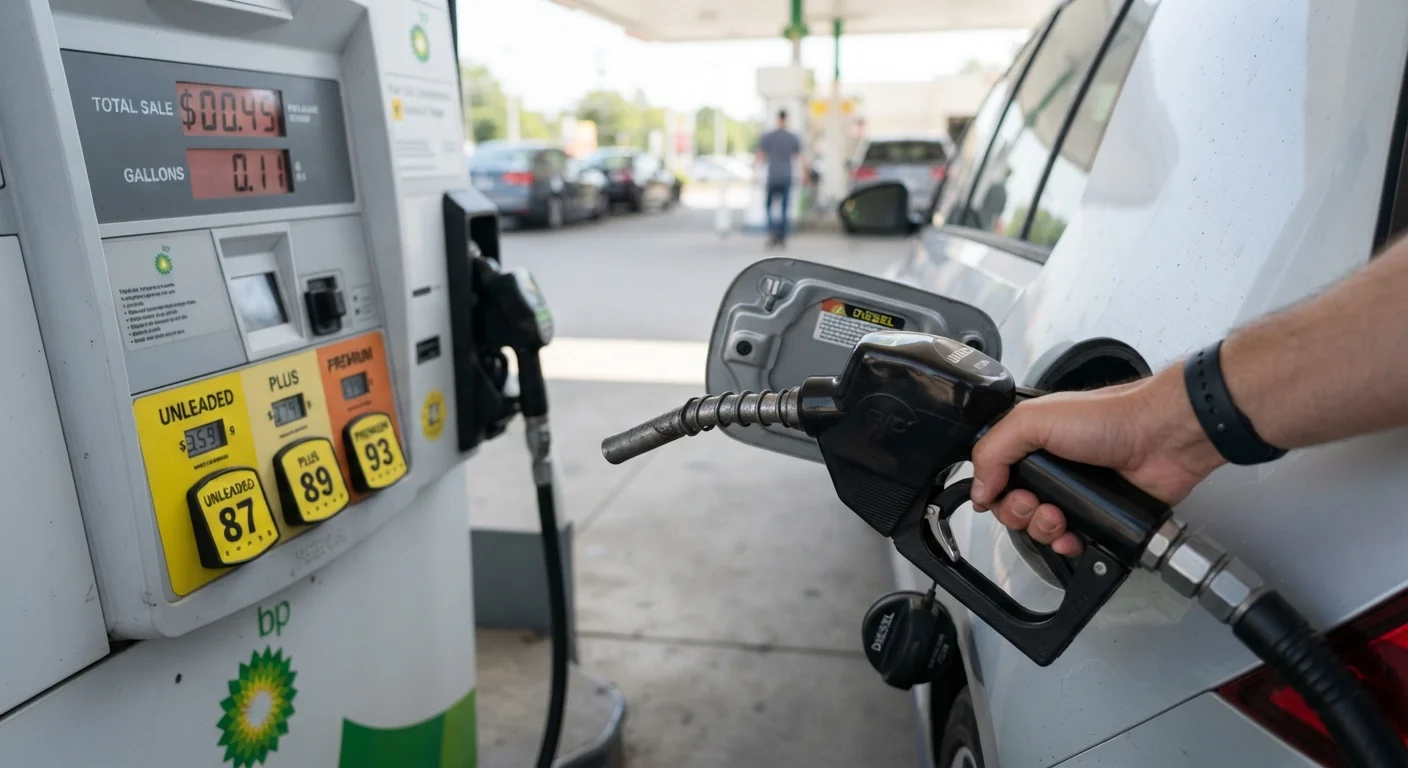
Photo credit: InGlimpse.com | Where Curiosity Finds Answers
In this article
Regular, mid-grade, premium — what's the real difference? Here's how octane ratings work and why using the right fuel matters.
Key Takeaways
- Your owner's manual specifies which fuel grade your engine requires or recommends — that's the definitive source.
- Using lower octane than required can cause engine knock, which stresses engine components over time.
- Paying for premium when your car only needs regular provides no measurable performance or efficiency benefit.
- Modern engines with knock sensors can adapt to lower-octane fuel, but often at the cost of reduced power output.
- Ethanol-blended fuels (E10, E15) are common; always check your owner's manual for compatibility before using higher blends.
The Three Grades at the Pump — And What They Actually Mean
Walk up to any gas pump in the US and you'll typically see three buttons: 87, 89, and 91 or 93. These numbers are octane ratings — a measure of a fuel's resistance to premature combustion inside your engine's cylinders. They are not measures of energy content, purity, or performance on their own.
Here's the basic dynamic: as your engine compresses the air-fuel mixture before ignition, low-octane fuel can ignite too early — before the spark plug fires. That uncontrolled ignition is what causes the knocking or pinging sound drivers sometimes hear under load. Higher-octane fuel is more chemically stable and resists that early ignition, making it necessary in high-compression or turbocharged engines that create more cylinder pressure.
Mid-grade at 89 sits between the two but is rarely the specified grade for any engine. Most vehicles are engineered to one standard or the other.
Altitude Can Affect Octane Requirements
At higher elevations, the air is thinner and engines produce less cylinder pressure, which reduces the tendency for knock. Some manufacturers allow lower-octane fuel at high altitudes for this reason. Check your owner's manual for any altitude-specific guidance — this is most relevant for drivers in mountainous states.
How to Know What Your Car Actually Needs
The only authoritative source is your vehicle's owner's manual. Manufacturers specify one of three situations: regular fuel is required, premium is required, or premium is recommended. That distinction — required versus recommended — matters.
- Required: The engine's compression ratio or forced induction system demands it. Consistently using lower-octane fuel risks engine knock and long-term wear.
- Recommended: The engine is tuned to perform best on premium but can run on regular. You may see a slight drop in power or efficiency with the lower grade.
- Regular only: No benefit comes from using a higher grade. The engine's design doesn't take advantage of additional octane stability.
Your owner's manual is the definitive guide for this — just as it is for oil type and maintenance intervals. If you haven't opened it yet, our guide on reading your owner's manual covers the sections that matter most.
Check the Inside of Your Fuel Door Too
Many vehicles print the required fuel grade directly on a label inside the fuel filler door — a quick reminder every time you fill up. If the label says "premium fuel only," treat that as a hard requirement. If it's absent, the owner's manual is your next stop.
Ethanol Blends: What E10, E15, and E85 Mean for Your Tank
Most gasoline sold in the US already contains up to 10% ethanol — labeled E10 — and it's compatible with all modern gasoline-powered vehicles. Ethanol is a renewable additive that also acts as an oxygenate, helping fuel burn more cleanly.
E15 (15% ethanol) is approved by the EPA for model year 2001 vehicles and newer, but individual manufacturers may have different positions on it. Check your manual before using it regularly, particularly if your vehicle is older or has a high-performance engine.
E85 — a blend of 51–83% ethanol — is only suitable for flex-fuel vehicles, which are specially equipped to handle the fuel system demands of high-ethanol blends. Using E85 in a standard gasoline vehicle can damage fuel system components and is not a safe alternative.
As a rule, fuel compatibility is one of those areas where the cost of getting it wrong far outweighs the minor inconvenience of checking first. Fuel-related damage isn't always covered under warranty if the wrong grade was used. This connects to the broader principle in preventive car maintenance — the right inputs protect against avoidable problems.
~90%
US gasoline sales that are regular (87 octane)
According to the US Energy Information Administration, the vast majority of gasoline sold at retail stations is regular grade, reflecting that most vehicles on the road are designed for it.
E10
Ethanol blend found in most US pump gasoline
The US Energy Information Administration notes that virtually all gasoline sold in the US contains up to 10% ethanol by volume as a standard additive.
91–93
Octane range classified as premium in the US
The Federal Trade Commission defines premium gasoline as fuel with an Anti-Knock Index of 91 or higher, though the exact number varies by retailer and region.
Common Misconceptions About Premium Fuel
A persistent myth is that premium gasoline contains more energy or runs cleaner, making it universally better. That's not accurate. Premium fuel has the same energy density as regular — the difference is purely in octane stability. Pouring 93 octane into an engine designed for 87 delivers no extra power, no cleaner burn, and no extended engine life.
Another misconception: that knocking is always audible. Modern vehicles are equipped with knock sensors that detect the pressure signatures of premature ignition and retard ignition timing automatically to compensate. The engine protects itself — but typically at the cost of some power and efficiency. You may never hear a knock, yet the engine is still compensating for underfueled conditions.
For vehicles with turbocharged engines in particular, which run higher cylinder pressures by design, the manufacturer's fuel requirement is especially important to follow consistently. These engines are calibrated assuming a specific octane floor, and the knock sensor's compensation has limits.
This article provides general educational information about automotive fuels. Always consult your vehicle's owner's manual and a qualified mechanic for guidance specific to your vehicle.
Frequently Asked Questions

Author
Autos Editorial Team
Autos Editorial Team is the collective byline for our editorial team and contributor network. Articles published under this byline or an editorial pen name are researched, written, and reviewed according to our editorial standards for clarity, consistency, and independence before publication.
View all articles →