
Reading Your Dashboard Warning Lights Without Panic
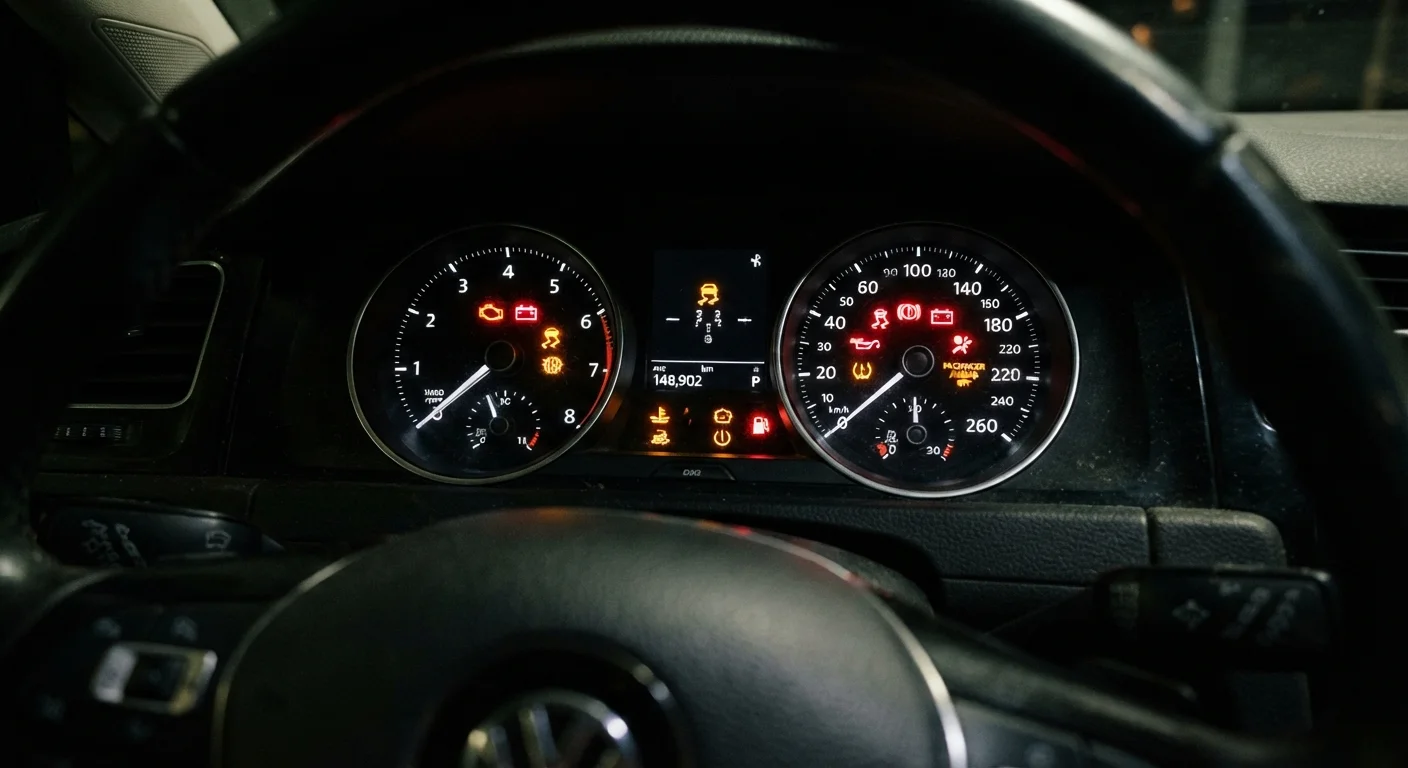
Photo credit: InGlimpse.com | Where Curiosity Finds Answers
In this article
A plain-language reference for every common dashboard warning light — what it signals, how urgent it is, and what to do next.
How to Read a Warning Light Before You Panic
The moment a dashboard light appears, most drivers experience one of two reactions: immediate alarm or complete dismissal. Neither serves you well. The color of a warning light is your first and most reliable signal about how to respond.
Red lights indicate a condition that could damage your vehicle or pose a safety risk. Pull over when it is safe to do so and assess before driving further. Yellow or amber lights mean something needs attention - typically within days or weeks, not immediately. Green and blue indicators are not warnings at all; they confirm a system is active (high beams, turn signals, cruise control).
A flashing light - regardless of color - is always more urgent than a steady one. A flashing Check Engine light, for example, typically signals an active engine misfire that can damage your catalytic converter if you continue driving at highway speeds.
| Red light urgency | Stop driving as soon as safely possible |
| Yellow/amber light urgency | Service needed soon; monitor and schedule a visit |
| Green/blue light meaning | System active or informational - not a warning |
| Check Engine light causes | Hundreds of possible fault codes; requires OBD-II scan to diagnose |
| Oil pressure warning response | Pull over immediately; do not continue driving |
| TPMS threshold (US standard) | Triggers when a tire is 25% below recommended pressure (NHTSA TPMS regulation) |
For the authoritative list specific to your vehicle, consult the warning lights section of your owner's manual - most dedicate several pages to this exactly.
The Most Common Warning Lights, Explained
Below are the dashboard lights most drivers encounter, grouped by urgency.
Stop Immediately (Red)
- Oil Pressure Warning (oil can icon): This means your engine is not getting adequate oil pressure - not necessarily that oil is low. Continuing to drive can cause catastrophic engine damage within minutes. Pull over, shut off the engine, and check the oil level only after the engine has cooled. See how to check engine oil and other fluids for guidance.
- Engine Temperature Warning (thermometer in liquid): Your engine is overheating. Turn off the AC, pull over safely, and let the engine cool before opening the hood. Do not remove the radiator cap while hot.
- Battery/Charging System (battery icon): The charging system has failed. Your car is running on battery reserve only. Limit electrical use, drive to the nearest safe stop, and have the alternator and battery tested.
- Brake Warning Light: If the parking brake is off and this light is on, it may indicate low brake fluid or a hydraulic fault. Do not ignore it. If braking feels different, have the vehicle inspected immediately. Learn more about recognizing brake wear signals.
Service Soon (Yellow/Amber)
- Check Engine (engine outline icon): This light covers hundreds of possible fault codes - from a loose gas cap to a failing oxygen sensor. A steady light means schedule a diagnostic scan soon. A flashing light means reduce speed and seek service today. An OBD-II scanner (available at auto parts stores) can pull the specific code.
- TPMS (tire with exclamation point): One or more tires are at least 25% below recommended pressure per U.S. federal standards. Check and inflate all four tires. The light may stay on briefly after inflation until the sensors reset.
- Traction Control / Stability Control (car with skid lines): When flashing, it means the system is actively working. When steady, it may indicate the system has been turned off or has a fault.
- Service Required / Wrench Icon: Typically a mileage-based maintenance reminder - often for an oil change. Check your maintenance schedule to confirm what service is due.
Your Owner's Manual Is the Final Word
Warning light symbols and their exact meanings vary by make, model, and model year. The guidance here reflects common industry standards, but your vehicle's owner's manual has the definitive interpretation for your specific car. Knowing which sections to consult can save you time when a light appears unexpectedly.
What to Do After the Light Comes On
Once you've identified the color and symbol, your next step depends on urgency:
- Red light or flashing light: Reduce speed, find a safe place to stop, and do not resume driving until you understand the cause. Call for roadside assistance if needed.
- Yellow light, steady: Note when it appeared and whether any driving behavior changed. Schedule a service appointment within the week. Avoid long highway trips until it's diagnosed.
- Any light: Check for fault codes with an OBD-II scanner or visit a shop for a diagnostic scan. Many auto parts retailers perform this at no charge.
Ignoring a warning light rarely makes the underlying problem disappear - it typically makes the eventual repair more expensive. Consistent attention to your dashboard is one of the simplest forms of preventive maintenance you can practice. For a broader view of keeping your vehicle on schedule, see how maintenance intervals work.
77%
Drivers who have ignored a warning light
According to a CarMD vehicle health index survey, a large majority of drivers have driven with an illuminated warning light without seeking immediate service.
~$400
Average cost of a Check Engine repair
CarMD's vehicle health index data suggests the average repair triggered by a Check Engine light costs several hundred dollars - often more when delayed.
When in doubt, a qualified mechanic is always the right resource. Dashboard warning lights are designed to give you a head start - not to serve as a complete diagnosis.

Author
Autos Editorial Team
Autos Editorial Team is the collective byline for our editorial team and contributor network. Articles published under this byline or an editorial pen name are researched, written, and reviewed according to our editorial standards for clarity, consistency, and independence before publication.
View all articles →