
Conventional vs. Synthetic Motor Oil: What Every Driver Should Know
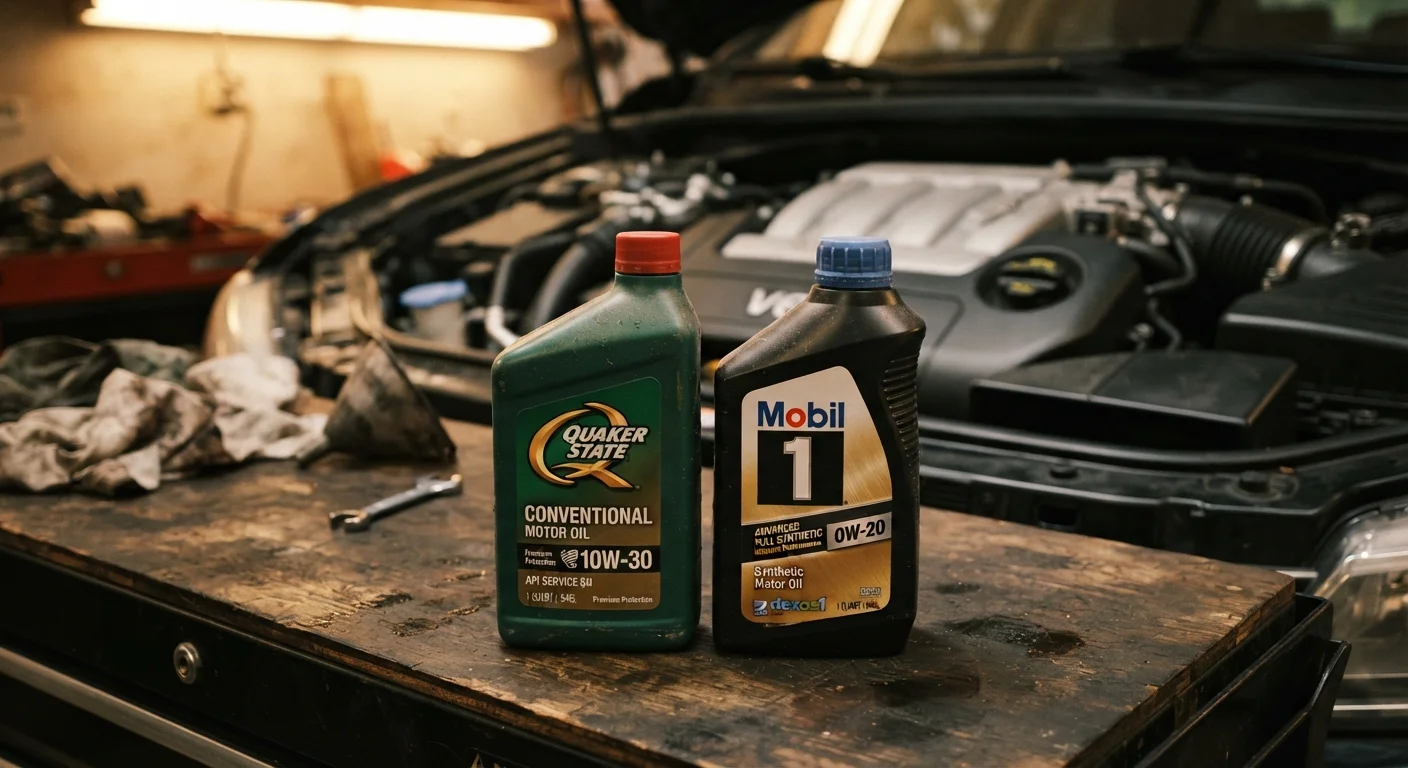
Photo credit: InGlimpse.com | Where Curiosity Finds Answers
In this article
A clear side-by-side look at conventional and synthetic motor oil — how they differ, when each is appropriate, and what your car actually needs.
Key Takeaways
- Conventional oil is refined from crude oil; synthetic is chemically engineered for more consistent molecular structure.
- Most vehicles built in the last decade are designed specifically for synthetic oil - check your owner's manual.
- Synthetic oil generally lasts longer between changes, but costs more per quart than conventional.
- Switching from conventional to synthetic in a well-maintained engine is safe and does not cause leaks.
- The right oil viscosity grade matters as much as the oil type - match it to your manufacturer's specification.
What Makes These Two Oils Different
Motor oil does one essential job: it lubricates the moving metal parts inside your engine, reducing friction and carrying heat away. Both conventional and synthetic oils do this, but they start from very different places.
Conventional motor oil is refined directly from crude petroleum. The refining process removes many impurities, but the result is a mixture of hydrocarbon molecules that vary in size and shape. That variation is normal and workable - conventional oil has lubricated engines reliably for decades.
Synthetic motor oil is either fully synthesized from chemical compounds or heavily processed base stocks to create a far more uniform molecular structure. That consistency is the key advantage: synthetic oil flows more predictably, resists breakdown at high temperatures, and maintains its protective properties longer than conventional oil.
There are also synthetic blends - a middle ground that mixes conventional base oil with synthetic base stocks. Blends offer some performance improvements over straight conventional oil without the full cost of a pure synthetic.
| Criterion | Conventional Oil | Synthetic Oil |
|---|---|---|
| Base source | Refined crude petroleum | Chemically engineered compounds |
| Molecular consistency | Variable molecule sizes | Highly uniform structure |
| Cold-weather flow | Thickens more at low temps | Flows faster at startup |
| High-temp stability | Breaks down faster under heat | Resists oxidation and sludge |
| Typical change interval | 3,000-5,000 miles (varies) | 7,500-15,000 miles (varies) |
| Cost per quart | Lower | Higher |
| Best engine fit | Older, simpler engines | Modern, turbocharged engines |
Performance, Protection, and Real-World Conditions
Where the difference between these two oil types becomes most practical is in demanding conditions. In cold weather, conventional oil thickens more than synthetic, which means the first seconds after a cold start - when most engine wear actually occurs - involve less protection. Synthetic oil flows faster at low temperatures, reaching critical engine parts sooner.
At high temperatures, conventional oil oxidizes and breaks down more quickly, forming sludge and deposits. Synthetic resists this process, which is why turbocharged engines and vehicles in hot climates benefit substantially from it.
~80%
Engine wear occurs at cold startup
Industry engineering research consistently indicates the majority of engine wear happens in the first moments after a cold start, before oil pressure fully builds.
2x-3x
Longer change intervals with synthetic
Synthetic motor oil is typically rated for change intervals two to three times longer than conventional oil, depending on vehicle manufacturer specifications.
For everyday highway commuting in a moderate climate with a standard naturally aspirated engine, conventional oil performs its job well within its rated service life. The critical requirement in either case is not exceeding the change interval recommended for that oil type.
It's worth noting that checking your oil level and condition between changes is a habit that pays off regardless of which oil type you use. Oil consumption and contamination can occur independently of the change schedule.
Cost, Change Intervals, and What Your Car Actually Requires
Conventional oil costs less per quart, but it typically requires more frequent changes - often every 3,000 to 5,000 miles under older guidelines, though many manufacturers now specify longer intervals even for conventional oil. Synthetic oil costs more upfront but is generally rated for 7,500 to 15,000 miles or more, depending on the vehicle and manufacturer specification.
The most reliable source for what your engine actually needs is your owner's manual. It specifies both the oil viscosity grade (such as 5W-30 or 0W-20) and whether synthetic oil is required or recommended. Many modern vehicles - particularly those with turbocharged engines or variable valve timing systems - are factory-specified for full synthetic. Using conventional oil in those engines can reduce protection and potentially void warranty coverage on lubrication-related failures.
Switching From Conventional to Synthetic
A common concern is whether switching to synthetic in an older engine will cause oil seals to leak. In a well-maintained engine without pre-existing seal damage, switching is generally safe - modern synthetic formulations are compatible with standard seal materials. However, if an engine already has worn or hardened seals, any oil change could surface that underlying issue. When in doubt, consult a qualified mechanic before switching oil types in a high-mileage engine.
The old rule of thumb - change your oil every 3,000 miles - is outdated for most modern vehicles. For a detailed breakdown of how to read and apply your manufacturer's actual service intervals, see oil change intervals explained. And if you haven't familiarized yourself with your manual's maintenance schedule section, reading your owner's manual is a genuinely useful exercise.

Author
Autos Editorial Team
Autos Editorial Team is the collective byline for our editorial team and contributor network. Articles published under this byline or an editorial pen name are researched, written, and reviewed according to our editorial standards for clarity, consistency, and independence before publication.
View all articles →