
Supplements for Pets: When They Help and When They Don't
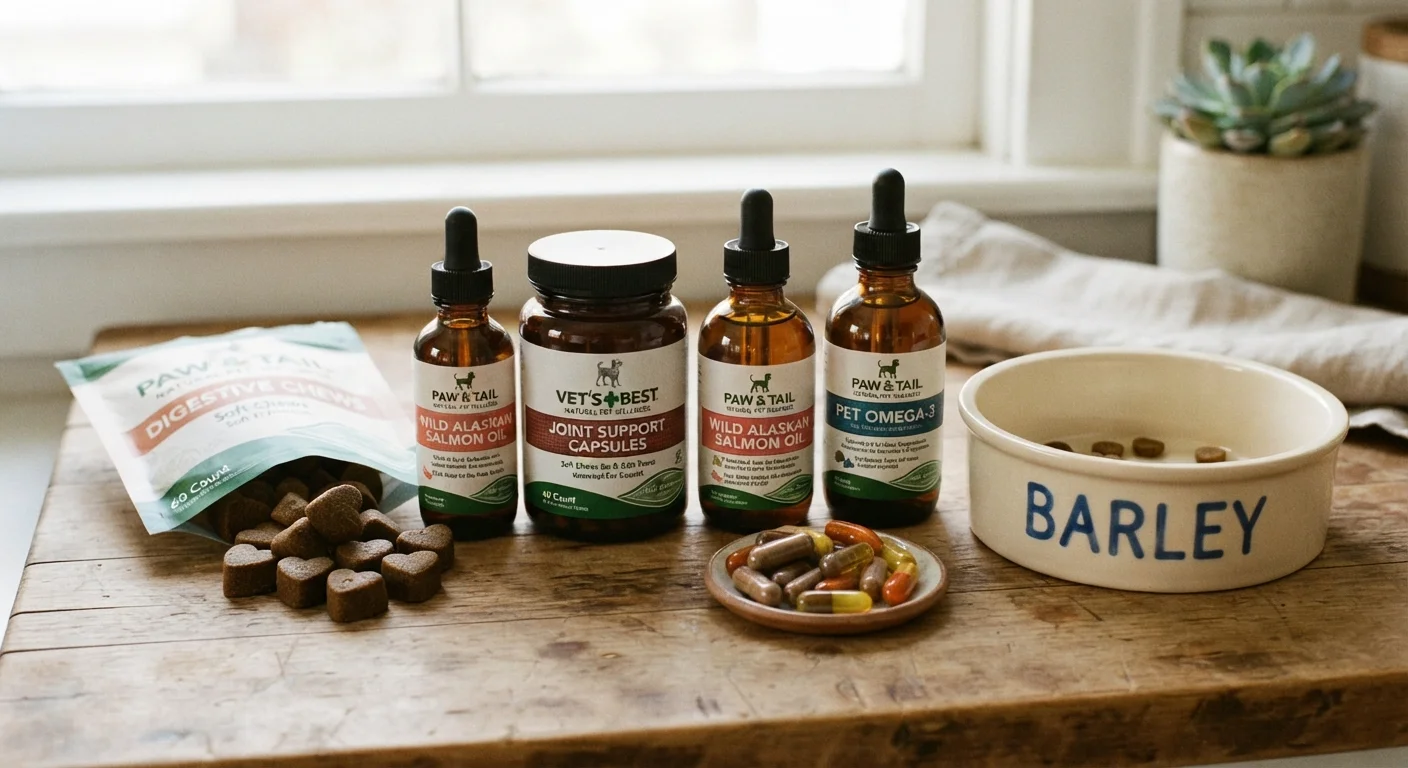
Photo credit: InGlimpse.com | Where Curiosity Finds Answers
In this article
Fish oil, probiotics, joint supplements — the pet supplement market is enormous. Here's an evidence-grounded look at what's supported and what isn't.
Key Takeaways
- Joint supplements like glucosamine have moderate evidence for mobility support in dogs with osteoarthritis.
- Omega-3 fatty acids from fish oil are among the most research-backed supplements for pets.
- Most healthy pets eating complete, balanced commercial diets do not need supplements.
- Supplement quality varies widely; the FDA does not pre-approve pet supplements before sale.
- Always consult a veterinarian before adding any supplement to your pet's routine.
Omega-3s backed by meaningful clinical research
Fish oil-derived EPA and DHA have demonstrated benefits for skin, coat, and inflammatory conditions in multiple peer-reviewed studies involving dogs and cats.
Fills genuine gaps in specific health conditions
Pets with osteoarthritis, diagnosed nutrient deficiencies, or recovery from illness can see real benefit from targeted supplementation under veterinary supervision.
Probiotics can aid gastrointestinal recovery
Species-specific probiotic formulations have shown measurable benefit in shortening acute diarrhea episodes in dogs, according to several small clinical trials.
Supports pets on nutritionally incomplete diets
Animals fed homemade or raw diets frequently lack key nutrients; targeted supplements can help address documented deficiencies when guided by a veterinary nutritionist.
Most lack pre-market safety or efficacy review
Unlike veterinary drugs, pet supplements do not require FDA approval before sale, meaning unsubstantiated claims and variable quality are common in the market.
Risk of nutrient toxicity from over-supplementation
Fat-soluble vitamins such as A and D accumulate in the body and can reach toxic levels; pets on balanced commercial diets who receive additional supplements are most at risk.
Human formulations are not safe substitutes
Many supplements formulated for people contain ingredients — such as xylitol, garlic extract, or certain herbs — that are harmful or fatal to dogs and cats.
Product purity and labeling accuracy vary widely
Independent testing has found that some pet supplements contain significantly more or less of the stated ingredient than the label claims, complicating dosing decisions.
Evidence base is thin for many popular categories
CBD, immune-boosting blends, and many herbal products lack rigorous, peer-reviewed clinical trials in companion animals to support their marketed benefits.
Why Pet Supplements Have Exploded in Popularity
The U.S. pet supplement market is estimated to be worth several billion dollars and continues to grow. Owners who prioritize their own wellness naturally extend that thinking to their animals — a reasonable impulse that the supplement industry has been quick to meet with an enormous range of products. Fish oil, probiotics, glucosamine, CBD, digestive enzymes, multivitamins: the list is long and the packaging persuasive.
What's missing from much of that packaging is nuance. Unlike human pharmaceuticals or even pet medications, supplements for animals are not required to demonstrate safety or efficacy before reaching store shelves. The FDA regulates pet supplements under the Federal Food, Drug, and Cosmetic Act as animal feed, but pre-market approval is not required. This means the burden of evaluating a supplement falls largely on the owner — ideally with veterinary guidance. See our common pet nutrition myths guide for context on how marketing claims often outpace the evidence.
AAFCO "Complete and Balanced" Labeling Explained
When a pet food label says "complete and balanced," it means the product meets the nutritional profiles established by AAFCO (Association of American Feed Control Officials) for the stated life stage. This is an important baseline: pets eating these diets generally do not require additional vitamin or mineral supplementation. Adding supplements on top of a complete diet is not automatically beneficial and can occasionally be harmful.
Supplements With Meaningful Evidence
Not all supplements are created equal. A handful have accumulated enough research in companion animals to make them credible options in specific situations.
- Omega-3 fatty acids (EPA and DHA): Derived primarily from fish oil, these are the most consistently supported pet supplements. Research suggests benefits for skin and coat health, inflammatory conditions, and possibly cardiac function in cats with certain heart diseases. Dosage matters, however, and fish oil can go rancid — quality and storage are important.
- Glucosamine and chondroitin: Evidence for managing canine osteoarthritis is moderate and mixed, but several studies suggest these compounds may help maintain cartilage and reduce discomfort in dogs with joint disease. They are generally well-tolerated. Results in cats are less clear.
- Probiotics: Certain strains — particularly species-specific formulations — have shown benefit for acute diarrhea and gastrointestinal recovery in dogs. The evidence for long-term systemic benefits is still emerging. Strain specificity matters significantly; a human-formulated probiotic is not equivalent to one designed for dogs or cats.
Omega-3s backed by meaningful clinical research
Fish oil-derived EPA and DHA have demonstrated benefits for skin, coat, and inflammatory conditions in multiple peer-reviewed studies involving dogs and cats.
Fills genuine gaps in specific health conditions
Pets with osteoarthritis, diagnosed nutrient deficiencies, or recovery from illness can see real benefit from targeted supplementation under veterinary supervision.
Probiotics can aid gastrointestinal recovery
Species-specific probiotic formulations have shown measurable benefit in shortening acute diarrhea episodes in dogs, according to several small clinical trials.
Supports pets on nutritionally incomplete diets
Animals fed homemade or raw diets frequently lack key nutrients; targeted supplements can help address documented deficiencies when guided by a veterinary nutritionist.
Where the Evidence Falls Short
Many pet supplements are sold on the basis of theoretical mechanisms or studies in humans, neither of which translates automatically to dogs and cats.
- Multivitamins for healthy pets: A pet eating a diet labeled "complete and balanced" per AAFCO (Association of American Feed Control Officials) guidelines is already receiving adequate vitamins and minerals. Adding a multivitamin can push certain nutrients into excess, and some — like fat-soluble vitamins A and D — are toxic in overdose.
- CBD products: Despite widespread popularity, robust clinical evidence in companion animals remains limited. Some preliminary studies are underway, but veterinarians cannot legally recommend or prescribe CBD in many states, and product purity is inconsistent.
- Herbal and "immune boosting" blends: These categories rarely have species-specific clinical trial data. Some herbal ingredients are actively toxic to pets — certain mushrooms, xylitol-containing products, and some botanical extracts pose real risks.
For pets on homemade diets, the gap between intention and nutritional adequacy is often significant. Our guide to overlooked nutrients in homemade diets outlines the specific deficiencies that arise most often.
Most lack pre-market safety or efficacy review
Unlike veterinary drugs, pet supplements do not require FDA approval before sale, meaning unsubstantiated claims and variable quality are common in the market.
Risk of nutrient toxicity from over-supplementation
Fat-soluble vitamins such as A and D accumulate in the body and can reach toxic levels; pets on balanced commercial diets who receive additional supplements are most at risk.
Human formulations are not safe substitutes
Many supplements formulated for people contain ingredients — such as xylitol, garlic extract, or certain herbs — that are harmful or fatal to dogs and cats.
Product purity and labeling accuracy vary widely
Independent testing has found that some pet supplements contain significantly more or less of the stated ingredient than the label claims, complicating dosing decisions.
Evidence base is thin for many popular categories
CBD, immune-boosting blends, and many herbal products lack rigorous, peer-reviewed clinical trials in companion animals to support their marketed benefits.
How to Evaluate a Supplement Before You Buy
If your veterinarian recommends or approves a supplement, a few quality markers are worth checking:
$700M+
U.S. pet supplement annual market size
Industry analysts have estimated the U.S. pet supplement sector at over $700 million annually, with consistent year-over-year growth driven by humanization of pets.
~50%
Pet owners who give supplements regularly
Surveys conducted by veterinary and industry groups suggest roughly half of dog and cat owners report giving their pet at least one supplement regularly.
0
Pre-market approvals required for pet supplements
Under current FDA regulatory framework, pet dietary supplements do not require pre-market approval for safety or efficacy before they can be sold to consumers.
- Look for a NASC (National Animal Supplement Council) quality seal — this indicates the manufacturer has met specific quality standards and adverse event reporting requirements.
- Check for third-party testing — independent certificate of analysis (COA) verification confirms the product contains what the label claims.
- Confirm species-appropriate formulation — cats have distinct metabolic needs and cannot safely process some ingredients that are harmless to dogs.
- Avoid vague proprietary blends — if the ingredient amounts are hidden behind a "blend" label, assessing safety or efficacy becomes difficult.
The principles of evaluating supplement labels overlap considerably with assessing any pet food. Our practical checklist for evaluating pet food applies many of the same critical-thinking skills. And for broader context on your pet's nutritional foundation, the pet care basics hub is a useful starting point.
This article is for general informational purposes only and does not constitute veterinary advice. Always consult a licensed veterinarian before making changes to your pet's diet or adding any supplement to their regimen.

Author
Pets Editorial Team
Pets Editorial Team is the collective byline for our editorial team and contributor network. Articles published under this byline or an editorial pen name are researched, written, and reviewed according to our editorial standards for clarity, consistency, and independence before publication.
View all articles →