
Foods That Are Toxic to Dogs and Cats: A Reference Guide
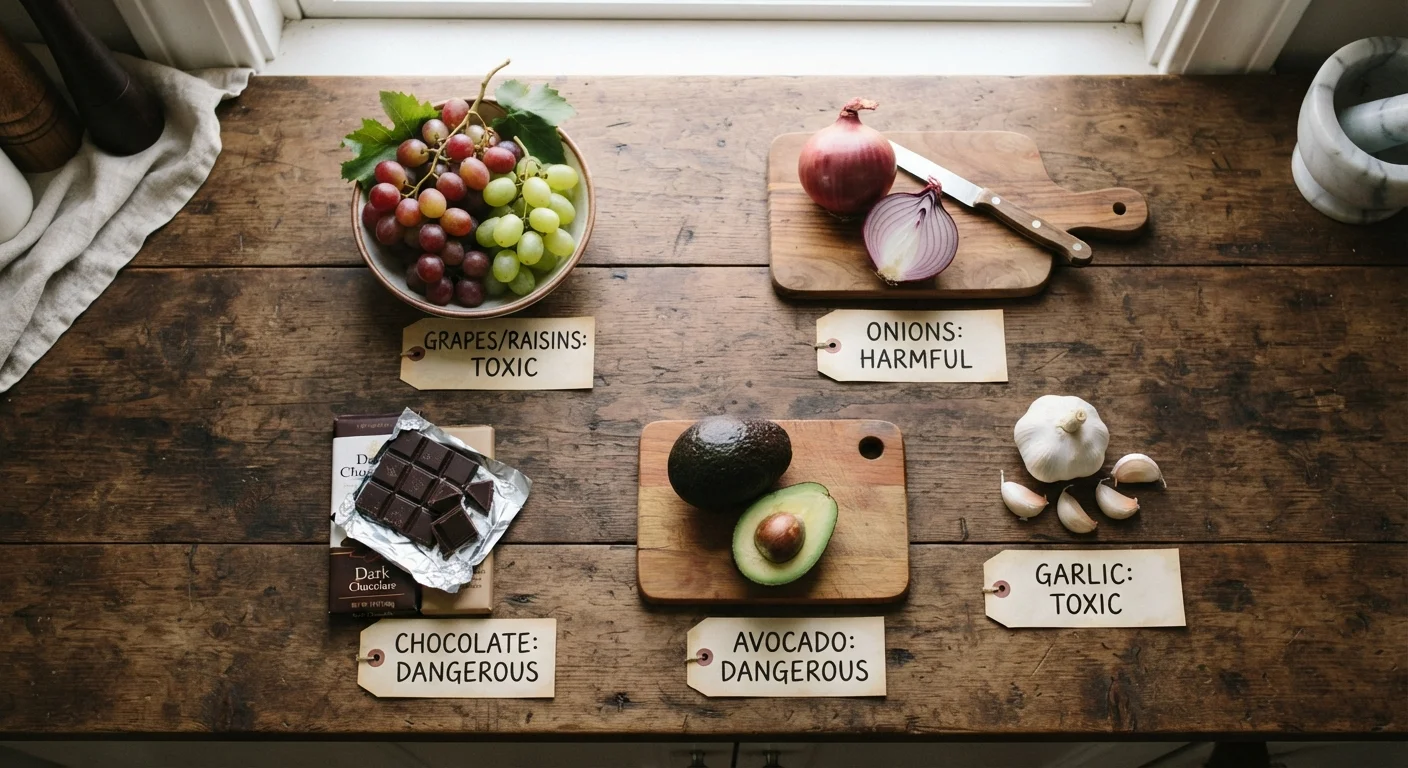
Photo credit: InGlimpse.com | Where Curiosity Finds Answers
In this article
From xylitol to onions to grapes — a factual reference on common household foods that are harmful to dogs and cats, with notes on why each poses a risk.
Why Some Human Foods Are Dangerous to Pets
Dogs and cats have metabolic systems that differ significantly from humans. Compounds that the human liver processes without issue can accumulate to toxic levels in pets, trigger organ failure, or interfere with red blood cell function. Understanding why a food is harmful — not just that it is — helps owners take the risk seriously and act quickly if an exposure occurs.
This reference covers the most commonly reported toxic foods for dogs and cats based on data from veterinary toxicology resources, including the ASPCA Animal Poison Control Center. If you suspect your pet has ingested any of the items listed here, contact your veterinarian or an animal poison control hotline immediately. Do not wait for symptoms to appear.
For a broader look at keeping your home safe, see the room-by-room pet safety checklist that covers kitchen hazards alongside other household risks.
| Primary toxicity hotline (US) | ASPCA Animal Poison Control Center: (888) 426-4435 (ASPCA Animal Poison Control Center) |
| Most commonly reported toxic food for dogs | Grapes and raisins (ASPCA APCC annual reports) |
| Species most sensitive to Allium toxicity | Cats (more sensitive than dogs) (Veterinary toxicology consensus) |
| Chocolate type with highest theobromine | Baking chocolate and dark chocolate (Merck Veterinary Manual) |
| Xylitol risk onset in dogs | Hypoglycemia within 30–60 minutes of ingestion (Merck Veterinary Manual) |
| Safe threshold for grapes/raisins in dogs | None established — all amounts should be treated as a risk (Veterinary toxicology consensus) |
The Most Harmful Foods: What They Are and Why They Cause Harm
The foods below represent the highest-risk items for household pets. Toxicity can depend on the amount ingested, the size of the animal, and individual sensitivity — but no safe threshold has been established for many of these, so all exposure should be treated as a concern.
Theobromine
A naturally occurring stimulant compound found in cacao. Dogs and cats metabolize it far more slowly than humans, allowing it to accumulate to toxic levels and affect the heart and nervous system.
Thiosulfates
Sulfur-containing compounds found in Allium vegetables such as onions and garlic. In dogs and cats, they oxidize hemoglobin in red blood cells, causing hemolytic anemia — a condition where red blood cells are destroyed faster than they can be replaced.
Hemolytic anemia
A condition in which red blood cells are destroyed prematurely, reducing the blood's ability to carry oxygen. In pets, Allium poisoning is a common cause.
Xylitol
A sugar alcohol used as a sweetener in many sugar-free human products. In dogs, it triggers an abnormal insulin release, causing hypoglycemia and potential liver damage.
Persin
A fungicidal toxin naturally present in avocado plants — in the leaves, skin, pit, and fruit flesh. It is particularly dangerous to birds and small mammals.
Gastric dilation
A condition in which the stomach fills with gas and expands abnormally, which can be life-threatening. In dogs, eating raw yeast dough is one potential trigger.
- Xylitol (birch sugar): Found in sugar-free gum, some peanut butters, baked goods, and dental products. In dogs, xylitol triggers a rapid release of insulin, causing dangerous hypoglycemia (low blood sugar). Higher doses can cause acute liver failure. Cats appear less commonly exposed but are also considered at risk.
- Grapes and raisins: The toxic mechanism in grapes and raisins is not fully identified, but both are linked to acute kidney failure in dogs. Even small amounts have caused serious illness in some individuals. Raisins are more concentrated and considered higher risk per gram.
- Onions, garlic, leeks, and chives: All members of the Allium family contain compounds called thiosulfates that damage red blood cells in both dogs and cats, leading to hemolytic anemia. Cats are more sensitive than dogs. Cooked forms are just as dangerous as raw.
- Chocolate and caffeine: Chocolate contains theobromine and caffeine, both of which dogs and cats metabolize very slowly. Dark chocolate and baking chocolate have the highest theobromine concentrations. Effects include vomiting, tremors, elevated heart rate, and in severe cases, seizures.
- Macadamia nuts: Toxic to dogs; the mechanism is unknown. Signs include weakness, hyperthermia, vomiting, and tremors, typically within 12 hours of ingestion. Cats are not well studied but should be kept away as a precaution.
- Avocado: Contains persin, a fungicidal toxin found in the flesh, skin, pit, and leaves. Birds and small mammals are highly susceptible. In dogs and cats, the primary concern is gastrointestinal upset; the pit also poses a choking and obstruction hazard.
- Alcohol: Even small amounts of ethanol can cause vomiting, disorientation, respiratory depression, and dangerously low blood sugar in pets. Fermented foods such as raw dough can also produce alcohol as yeast metabolizes in the stomach.
- Raw yeast dough: Expands in the warm stomach environment, causing painful bloating and potentially life-threatening gastric dilation. Fermenting yeast also produces ethanol, compounding the toxic risk.
- Cooked bones: While not a food toxin in the chemical sense, cooked bones splinter and can cause internal lacerations, obstructions, or choking. This is an important safety note for owners who prepare meat at home.
Top 5
Chocolate ranks among top 5 pet toxin calls annually
According to ASPCA Animal Poison Control Center annual data, chocolate consistently ranks among the most common reasons owners call the hotline.
30–60 min
Onset time for xylitol-induced hypoglycemia in dogs
The Merck Veterinary Manual notes that signs of low blood sugar in dogs can appear within 30 to 60 minutes of xylitol ingestion.
Both species
Allium toxicity affects both dogs and cats
Veterinary toxicology consensus confirms that onions, garlic, and related vegetables cause red blood cell damage in both dogs and cats, with cats showing greater sensitivity.
If you are preparing homemade meals for your pet, reviewing commonly overlooked nutrients in homemade pet diets can help you build a safer, more complete diet overall.
Label Reading Matters for Pet Safety
Xylitol and other harmful ingredients are sometimes found in unexpected products — including certain peanut butters, vitamin supplements, and flavored medications. Always check labels before sharing any human food or supplement with your pet. For help understanding ingredient labels more broadly, see how to read your pet's food label.
This article is for general informational purposes only and is not a substitute for veterinary advice. If your pet has ingested a potentially toxic substance, contact your veterinarian or the ASPCA Animal Poison Control Center immediately.

Author
Pets Editorial Team
Pets Editorial Team is the collective byline for our editorial team and contributor network. Articles published under this byline or an editorial pen name are researched, written, and reviewed according to our editorial standards for clarity, consistency, and independence before publication.
View all articles →