
Out-of-Pocket Maximum vs. Deductible: Which Limits What You Pay
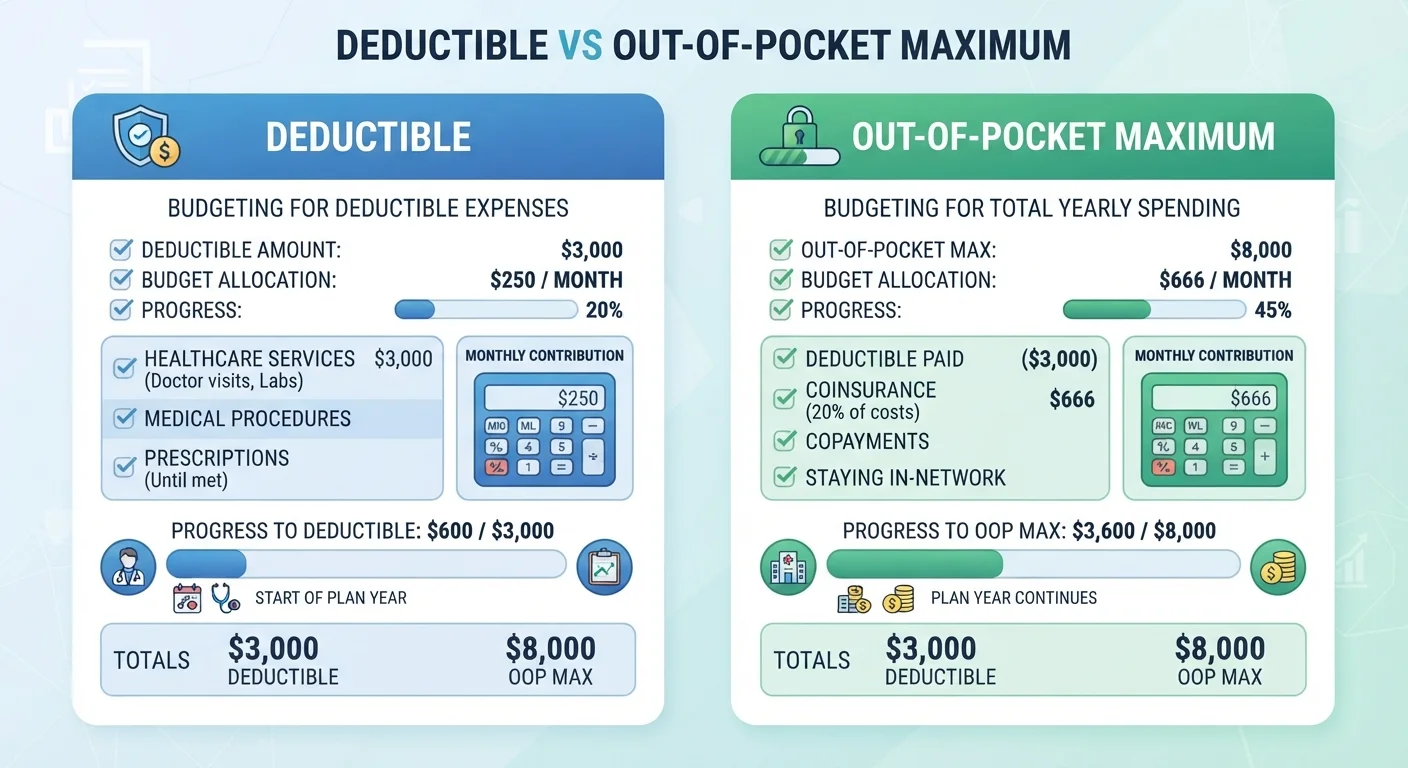
Photo credit: InGlimpse.com | Where Curiosity Finds Answers
In this article
Both terms cap your costs, but they work in different ways and at different points. Here's a clear comparison to help you budget with confidence.
Key Takeaways
- Your deductible is the amount you pay first before insurance covers most services.
- The out-of-pocket maximum is the most you'll pay for covered care in a plan year.
- Costs you pay toward your deductible typically count toward your out-of-pocket maximum.
- Premiums and costs for non-covered services usually do not count toward either limit.
- Both figures reset at the start of each new plan year.
- Knowing both numbers helps you budget realistically for predictable and unexpected care.
How Each Term Actually Works
Both the deductible and the out-of-pocket maximum are cost-control tools built into your health insurance plan, but they operate at different stages of your spending. Mixing them up can lead to budget surprises. A plain-language breakdown of deductibles, premiums, and copays is a useful starting point if any of these terms feel unfamiliar.
The deductible is a fixed dollar amount you pay out of your own pocket for covered services before your insurer begins sharing costs. If your deductible is $1,500, you pay the first $1,500 in covered medical bills yourself. After that, cost-sharing — typically coinsurance or copays — kicks in.
The out-of-pocket maximum (sometimes called the out-of-pocket limit) is the absolute ceiling on what you'll spend on covered services within a single plan year. Once your combined payments — deductible, copays, and coinsurance — reach that ceiling, your insurer pays 100% of covered costs for the rest of the year.
| Criterion | Deductible | Out-of-Pocket Maximum |
|---|---|---|
| What it is | Amount you pay before insurer shares costs | Maximum you pay for covered care in a year |
| When it applies | At the start of your plan year | After deductible and cost-sharing accumulate |
| Effect once reached | Cost-sharing (copays/coinsurance) begins | Insurer pays 100% of covered costs |
| Counts toward the other? | Yes — counts toward out-of-pocket max | Includes deductible payments |
| Premiums count toward it? | No | No |
| Resets annually? | Yes, each plan year | Yes, each plan year |
| Key planning use | Estimate early-year out-of-pocket spending | Estimate worst-case annual exposure |
What Counts Toward Each — and What Doesn't
One of the most common points of confusion is understanding what expenses actually apply to these two limits. Payments you make toward your deductible generally count toward your out-of-pocket maximum as well — the deductible is essentially the first layer of your total annual exposure.
However, several common expenses typically do not count toward either the deductible or the out-of-pocket maximum:
- Monthly premiums — the fixed cost to maintain your coverage
- Costs for services not covered by your plan — such as some vision or dental care on a standard medical plan
- Balance billing charges from out-of-network providers, in many cases
- Costs exceeding plan allowances, such as amounts above the allowed benefit for a service
This distinction matters because you could spend significant money on out-of-network care or non-covered services and still owe the full deductible and out-of-pocket maximum on top of it. Understanding what your health plan actually covers before you need care is one of the most practical steps you can take.
$1,500+
Typical individual deductible on employer plans
Average individual deductibles on employer-sponsored plans have exceeded $1,500 in recent years, according to KFF (Kaiser Family Foundation) annual employer health benefits surveys.
$9,450
ACA out-of-pocket maximum limit for individuals (2024)
The Affordable Care Act sets an annual cap on how high insurers can set out-of-pocket maximums for in-network covered services on compliant plans.
How They Work Together in Practice
Think of the two figures as sequential milestones. Say your plan has a $1,500 deductible and a $5,000 out-of-pocket maximum. Here's a simplified sequence of how costs might flow:
- You pay 100% of covered costs until you've spent $1,500 — your deductible is met.
- After that, you pay a share (say 20% coinsurance) while your insurer covers the rest.
- Once your total payments — including those first $1,500 — reach $5,000, your insurer covers 100% for the rest of the plan year.
Both figures reset when your new plan year begins. If you're evaluating whether a high-deductible plan makes sense for your situation, a closer look at high-deductible health plan trade-offs covers the financial considerations in detail.
Family plans add another layer: they typically include both individual and family-level deductibles and out-of-pocket maximums. One family member's spending may meet their individual threshold before the family threshold is reached. Review your Summary of Benefits and Coverage document — insurers are required to provide it — to understand exactly how your plan structures these limits.
This article is for general informational purposes only and does not constitute personalized insurance, financial, or legal advice. Coverage terms, limits, and rules vary by plan and provider. Consult a licensed insurance agent or adviser and review your actual policy documents before making coverage decisions.

Author
Insurance Editorial Team
Insurance Editorial Team is the collective byline for our editorial team and contributor network. Articles published under this byline or an editorial pen name are researched, written, and reviewed according to our editorial standards for clarity, consistency, and independence before publication.
View all articles →