
The Real Trade-Offs of Choosing a High-Deductible Health Plan
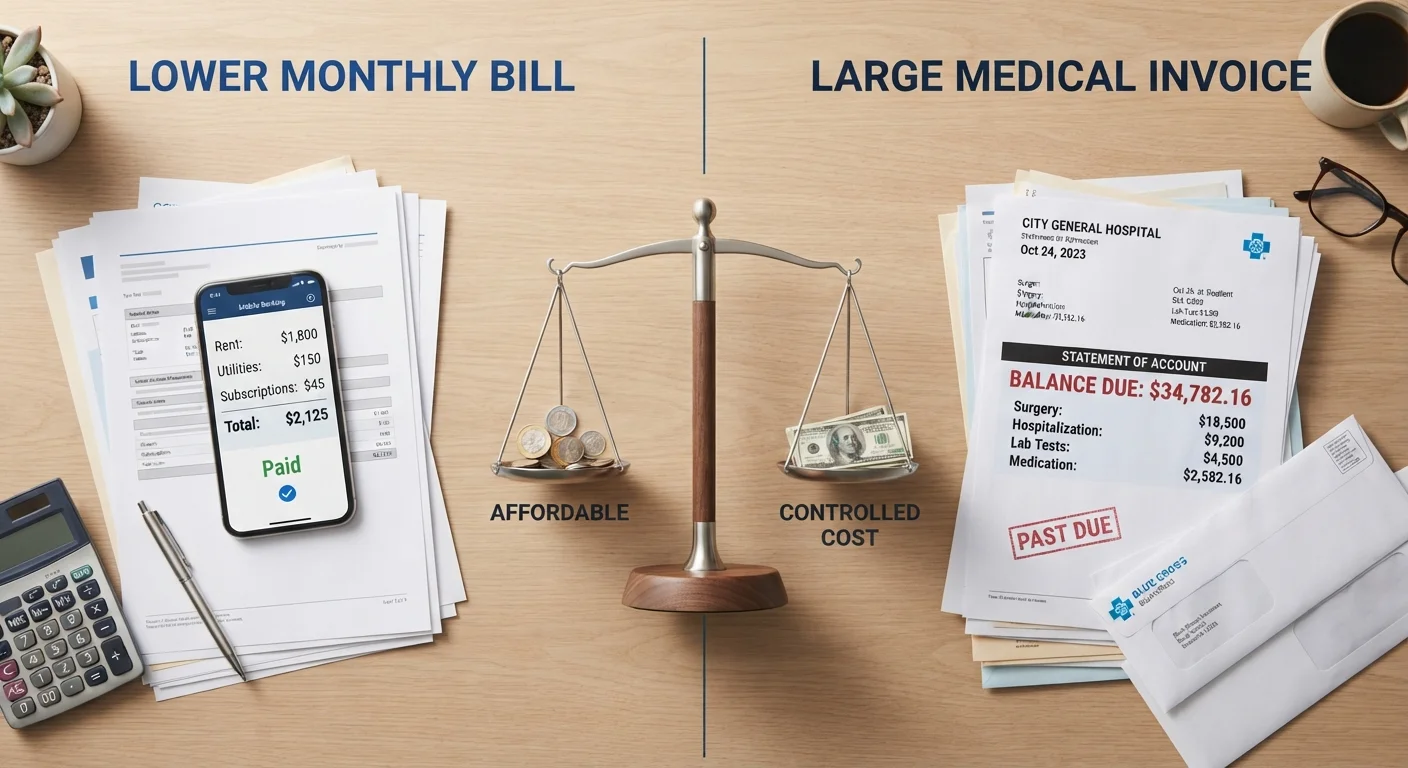
Photo credit: InGlimpse.com | Where Curiosity Finds Answers
In this article
Lower premiums come at a cost. A balanced look at how high-deductible health plans work and the situations where they make sense — or don't.
Key Takeaways
- HDHPs carry lower monthly premiums but require you to pay more out-of-pocket before insurance kicks in.
- Pairing an HDHP with a Health Savings Account (HSA) can offset costs if you contribute consistently.
- People with frequent medical needs or chronic conditions often pay more overall with an HDHP.
- The IRS sets minimum deductible thresholds each year that define what qualifies as an HDHP.
- Your financial cushion matters as much as your health status when evaluating an HDHP.
Lower monthly premiums reduce regular fixed costs
HDHPs typically cost noticeably less per month than traditional plans. For someone who rarely needs care, the annual premium savings can exceed what they spend out-of-pocket.
HSA eligibility unlocks a triple tax advantage
Contributions reduce taxable income, funds grow tax-free, and qualified withdrawals are also tax-free. HSA balances roll over year to year, allowing long-term accumulation.
Encourages more cost-aware healthcare decisions
Paying directly before the deductible gives people a stronger incentive to compare costs, ask about generics, and avoid unnecessary services — which can reduce total spending.
HSA funds can be invested for long-term growth
Once an HSA reaches a threshold balance, many account providers allow the funds to be invested in mutual funds or similar vehicles, giving them potential to grow beyond a standard savings account.
High upfront costs before coverage activates
Until you meet the deductible, you're responsible for the full cost of most covered services. An unexpected illness or injury early in the plan year can mean thousands of dollars in immediate expenses.
Risky without adequate emergency savings
The plan only makes financial sense if you have cash available to cover a deductible-sized bill. Without that cushion, a medical event can translate directly into debt.
Often costs more for high-utilizers of care
Anyone who regularly sees specialists, manages a chronic condition, or fills ongoing prescriptions may spend significantly more total dollars under an HDHP than under a plan with higher premiums but lower cost-sharing.
HSA value is only realized with consistent contributions
The tax advantages of an HSA are meaningful only if you actually fund the account. People with tight monthly budgets may find it difficult to both pay premiums and build HSA reserves simultaneously.
Preventive care aside, most services require full out-of-pocket payment early in the year
While preventive services must be covered at no cost under federal law, most other care — including urgent care and non-preventive prescriptions — counts toward the deductible and is paid in full until it's met.
What Makes a Plan 'High-Deductible'?
A high-deductible health plan, commonly called an HDHP, is defined by federal thresholds — not a loose description. The IRS sets minimum deductible amounts each year that a plan must meet to qualify. For 2024, a plan must carry a deductible of at least $1,600 for an individual or $3,200 for a family to be classified as an HDHP.
That deductible is the amount you pay for covered services before your insurer begins sharing costs. Until you hit it, you're generally paying the full negotiated rate for doctor visits, labs, and prescriptions. If you're new to how deductibles interact with premiums and copays, the plain-language breakdown of these terms is a useful starting point.
HDHPs are the only plan type that qualifies you to open a Health Savings Account (HSA) — a tax-advantaged account you can use to pay for qualified medical expenses. That pairing is central to how HDHPs are marketed and how they function in practice.
The Advantages Worth Taking Seriously
The most immediate benefit is the premium difference. HDHPs consistently carry lower monthly premiums than comparable low-deductible plans. For someone who rarely uses medical services in a given year, those monthly savings can add up meaningfully.
Lower monthly premiums reduce regular fixed costs
HDHPs typically cost noticeably less per month than traditional plans. For someone who rarely needs care, the annual premium savings can exceed what they spend out-of-pocket.
HSA eligibility unlocks a triple tax advantage
Contributions reduce taxable income, funds grow tax-free, and qualified withdrawals are also tax-free. HSA balances roll over year to year, allowing long-term accumulation.
Encourages more cost-aware healthcare decisions
Paying directly before the deductible gives people a stronger incentive to compare costs, ask about generics, and avoid unnecessary services — which can reduce total spending.
HSA funds can be invested for long-term growth
Once an HSA reaches a threshold balance, many account providers allow the funds to be invested in mutual funds or similar vehicles, giving them potential to grow beyond a standard savings account.
The HSA benefit deserves particular attention. Contributions are tax-deductible, growth is tax-free, and withdrawals for qualified medical expenses are also tax-free — a rare triple tax advantage in the US tax code. Unlike a Flexible Spending Account, HSA funds roll over indefinitely. If you fund the account consistently and stay relatively healthy, it can build into a significant medical reserve over time.
HDHPs also tend to make consumers more cost-conscious. When you're spending your own money before the deductible, you're more likely to compare prices on procedures and ask about generic medications — behaviors that can reduce overall spending.
The Real Downsides You Should Weigh
The core risk is straightforward: if you need significant medical care in a given year, you'll pay a lot out-of-pocket before your insurer contributes. That's not a hypothetical — accidents, unexpected diagnoses, and chronic flare-ups happen. For anyone without cash reserves equal to their deductible, an HDHP can create serious financial strain.
High upfront costs before coverage activates
Until you meet the deductible, you're responsible for the full cost of most covered services. An unexpected illness or injury early in the plan year can mean thousands of dollars in immediate expenses.
Risky without adequate emergency savings
The plan only makes financial sense if you have cash available to cover a deductible-sized bill. Without that cushion, a medical event can translate directly into debt.
Often costs more for high-utilizers of care
Anyone who regularly sees specialists, manages a chronic condition, or fills ongoing prescriptions may spend significantly more total dollars under an HDHP than under a plan with higher premiums but lower cost-sharing.
HSA value is only realized with consistent contributions
The tax advantages of an HSA are meaningful only if you actually fund the account. People with tight monthly budgets may find it difficult to both pay premiums and build HSA reserves simultaneously.
Preventive care aside, most services require full out-of-pocket payment early in the year
While preventive services must be covered at no cost under federal law, most other care — including urgent care and non-preventive prescriptions — counts toward the deductible and is paid in full until it's met.
People managing ongoing health conditions — diabetes, asthma, mental health treatment, recurring specialist visits — often find that the premium savings are quickly consumed by higher out-of-pocket costs. The math that favors an HDHP for a healthy 30-year-old shifts significantly for someone who reliably hits or exceeds their deductible each year.
It's also worth understanding how the out-of-pocket maximum interacts with the deductible. The distinction between deductibles and out-of-pocket maximums matters a lot in a worst-case year — and HDHP out-of-pocket maximums can be high.
Preventive Care Is Still Covered at No Cost
Under the Affordable Care Act, HDHPs — like all ACA-compliant plans — must cover a defined set of preventive services at no cost to you, even before you meet the deductible. This includes annual wellness visits, certain screenings, and recommended vaccinations. However, if a preventive visit leads to treatment or diagnostic services, those additional services may not be covered the same way. Always confirm with your insurer what's classified as preventive versus diagnostic before scheduling care.
How to Decide if an HDHP Fits Your Situation
Start with two honest assessments: your health history and your savings cushion. If you can answer yes to both of the following, an HDHP is worth running the numbers on — if not, a lower-deductible plan may cost you less overall even with higher premiums.
- Do you have savings equal to your plan's deductible? If a $2,000 expense in March would derail your finances, a plan requiring that much before coverage begins is a material risk.
- Is your expected annual medical spending genuinely low? Think about the last two or three years. Routine checkups, a prescription or two, maybe one urgent care visit — that's a very different profile than quarterly specialist appointments.
Also consider the employer contribution factor. Many employers who offer HDHPs contribute to employees' HSAs as part of the benefits package. That contribution changes the calculation substantially — effectively lowering your real deductible exposure. For a broader look at what your plan actually covers once the deductible is met, see what health insurance typically covers and excludes.
~57%
Workers offered an HDHP option
According to KFF's Employer Health Benefits Survey, a majority of covered workers have access to an HDHP through their employer, making it one of the most common plan structures offered.
$1,600
IRS minimum individual HDHP deductible (2024)
The IRS adjusts HDHP thresholds annually for inflation; plans must meet these minimums to qualify for HSA pairing under federal rules.
$4,150
2024 HSA contribution limit (individual)
The IRS caps how much you can contribute to an HSA per year; the 2024 individual limit is $4,150 and the family limit is $8,300, with catch-up contributions allowed at age 55+.
This article provides general information about health insurance plan structures and is not personalized medical or financial advice. Coverage terms, deductibles, and eligibility rules vary by plan and insurer. Consult a licensed insurance professional or benefits adviser to evaluate options based on your specific circumstances.

Author
Insurance Editorial Team
Insurance Editorial Team is the collective byline for our editorial team and contributor network. Articles published under this byline or an editorial pen name are researched, written, and reviewed according to our editorial standards for clarity, consistency, and independence before publication.
View all articles →