
Setting Up a New Kitchen Appliance Safely: What the Manual Often Glosses Over
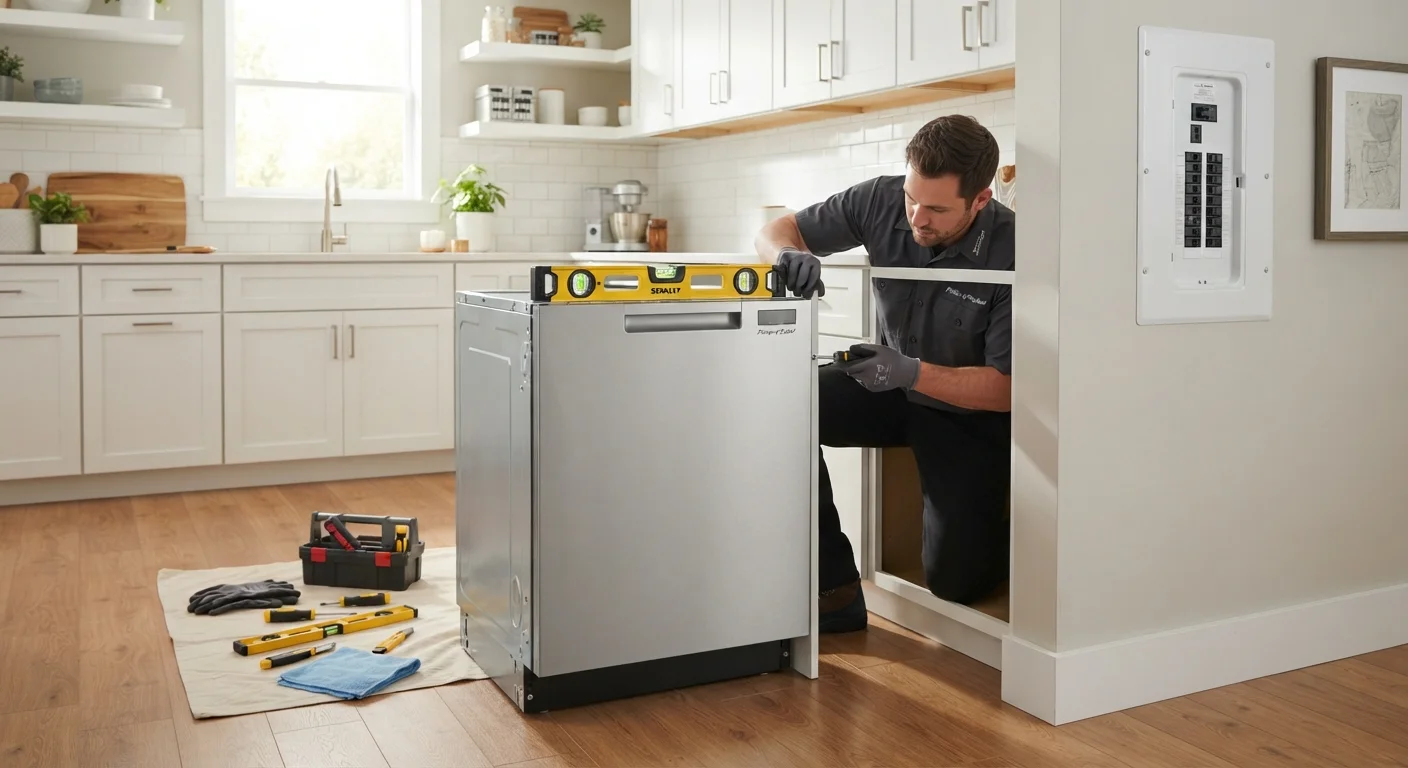
Photo credit: InGlimpse.com | Where Curiosity Finds Answers
In this article
Proper installation affects both performance and safety. Here's what to verify for leveling, ventilation, electrical load, and water connections.
Key Takeaways
- Manuals often skip critical site-prep steps like circuit capacity checks and clearance requirements.
- Improper leveling, ventilation, and water connections are the most common causes of early appliance failure.
- Several installation tasks — gas lines, dedicated circuits — require a licensed professional by code in most jurisdictions.
- Running through a pre-use checklist catches problems before they become costly repairs or safety hazards.
Why the Manual Isn't Enough
Most kitchen appliance manuals tell you how to operate the appliance, but they're often thin on the site-preparation details that actually determine whether an installation is safe and effective. They assume your kitchen is already wired, plumbed, and ventilated to spec — an assumption that frequently doesn't hold up in older homes or newly renovated spaces.
The result: appliances that underperform, trip breakers, vibrate excessively, or develop leaks within months of installation. Some failures are inconvenient; others, like improper gas connections or overloaded circuits, carry real safety risk. Before you plug anything in or run the first cycle, use this checklist to verify what the manual glosses over.
If you're moving into a new home, the first-home appliance inspection guide covers what to audit on inherited machines as well.
Bubble or digital level
Confirms the appliance is level front-to-back and side-to-side before final positioning.
Non-contact voltage tester
Verifies that an outlet or circuit is de-energized before you inspect wiring or make connections.
Adjustable wrench
Tightens water supply line fittings and leveling lock nuts without over-torquing.
Gas leak detector solution or electronic detector
Used to test gas connections for leaks after a licensed technician completes the hookup.
Tape measure
Confirms appliance dimensions and required clearances match the installation space.
Flashlight or headlamp
Illuminates the area behind or beneath the appliance for inspecting connections and hoses.
The Full Setup Checklist
Work through these groups in order — location and electrical readiness should be confirmed before the appliance is moved into its final position. For gas appliances or any work requiring a new dedicated circuit, consult a licensed plumber or electrician before proceeding; local codes in most jurisdictions require it.
Location and Clearances
Electrical Readiness
Gas Connections (Gas Appliances Only)
Water Supply and Drainage (Where Applicable)
Ventilation
Documentation and Final Checks
Gas and Electrical Work Requires a Licensed Professional
In most U.S. jurisdictions, connecting or modifying a gas line and installing a new dedicated electrical circuit each require a licensed professional and may require a permit and inspection. Attempting this work without proper credentials can void your homeowner's insurance, create serious safety hazards, and result in code violations. Always check local requirements before proceeding with anything beyond plugging into an existing, properly rated outlet.
Don't Skip the Recall Check
Kitchen appliances are among the most frequently recalled consumer products. Before you run the first cycle on any new appliance, search the model number at cpsc.gov. Recalls are issued for issues ranging from fire risk to electrical shock — hazards that aren't visible during a standard setup inspection. Registration with the manufacturer also helps ensure you're notified of future recalls.
After the First Run: What to Monitor
The first few operating cycles reveal most installation problems. Listen for unusual vibration or rattling, which often signals leveling is off or shipping hardware was left in place. Check under and behind the appliance for moisture after the first dishwasher or refrigerator cycle. Confirm a range or cooktop ignites evenly on all burners and that any hood ventilation is actually moving air to the exterior — not recirculating it into a cabinet.
Keep installation records — model number, serial number, install date, and any permits pulled — in one place. That information matters for warranty claims and, eventually, for making sense of how long the appliance should reasonably last. If your setup involves a dryer, vent routing deserves its own review; the dryer venting safety guide covers the specifics most homeowners miss.
This article is for general informational purposes only. Electrical, gas, and plumbing work may require permits and must be performed by licensed professionals in accordance with local codes. Always verify requirements with your local building authority before proceeding.

Author
Home Editorial Team
Home Editorial Team is the collective byline for our editorial team and contributor network. Articles published under this byline or an editorial pen name are researched, written, and reviewed according to our editorial standards for clarity, consistency, and independence before publication.
View all articles →