
Gas Range vs. Electric Range: What Changes Beyond the Burner
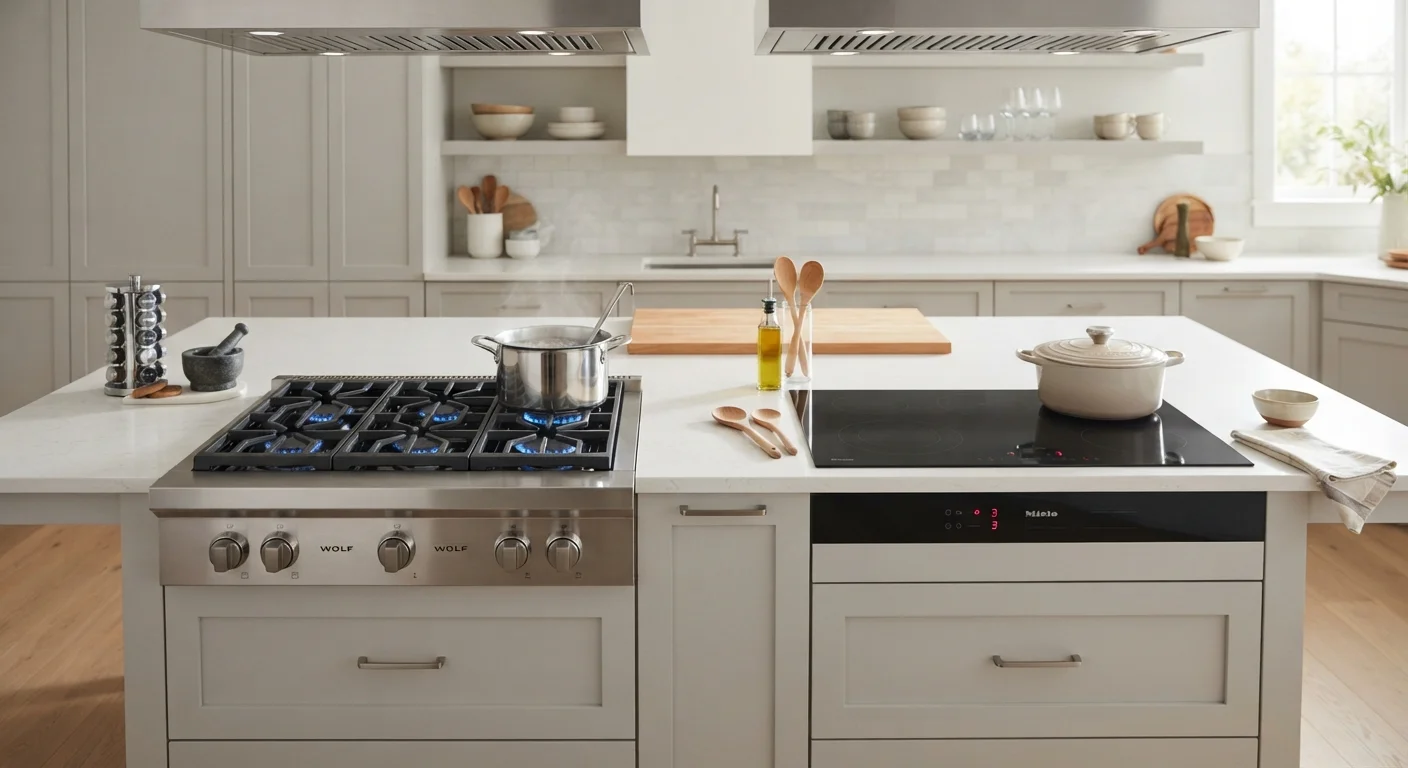
Photo credit: InGlimpse.com | Where Curiosity Finds Answers
In this article
Cooking performance is just part of the picture. Compare installation requirements, safety considerations, and long-term operating costs for both range types.
Key Takeaways
- Gas ranges require a dedicated natural gas or propane line plus a standard 120V outlet; electric ranges need a 240V circuit.
- Electric ovens generally produce more even, consistent heat, while gas ovens can have hotter spots near the burner.
- Carbon monoxide and combustion byproducts from gas ranges make ventilation a critical safety consideration.
- Operating costs depend heavily on local utility rates — neither type is universally cheaper to run.
- Switching from one fuel type to the other typically involves significant installation work and cost.
Installation: What Your Home Needs to Support Each Type
Before comparing cooking performance, it's worth understanding what each range type demands from your home's infrastructure — because switching fuel types isn't a simple swap.
Gas ranges require a natural gas supply line (or a propane conversion kit) routed to the range location, plus a standard 120V outlet to power the igniter, clock, and controls. If your home already has a gas line in the kitchen, installation is relatively straightforward. If it doesn't, you'll need a licensed plumber or gas fitter to run a new line — a job that typically requires permits and professional inspection.
Electric ranges need a dedicated 240V, 40–50 amp circuit. Many older homes may have only a 120V outlet in the kitchen, meaning an electrician would need to run new wiring from the panel. This work also requires permits in most jurisdictions.
Either way, before purchasing a new range, verify your kitchen's existing hookups. See our guide to setting up kitchen appliances safely for what to check around leveling, ventilation, and electrical load before installation day.
| Criterion | Gas Range | Electric Range |
|---|---|---|
| Utility hookup needed | Gas line + 120V outlet | 240V dedicated circuit |
| Stovetop heat response | Instant, visual flame control | Gradual heat-up and cool-down |
| Oven heat consistency | Can have hot spots | Generally more even |
| Indoor air quality impact | Combustion byproducts produced | No combustion byproducts |
| Ventilation requirement | Strongly recommended (vented hood) | Standard kitchen ventilation |
| Operating cost | Varies by local gas rates | Varies by local electric rates |
| Cookware compatibility | Works with all cookware types | All types (induction needs magnetic cookware) |
Safety Considerations That Go Beyond the Flame
The most significant safety difference between these two range types isn't fire risk — it's air quality.
Gas ranges produce combustion byproducts including carbon monoxide, nitrogen dioxide, and particulate matter. Research from institutions such as the Rocky Mountain Institute and various public health organizations has raised questions about indoor air quality in homes with gas appliances, particularly in poorly ventilated kitchens. A functioning range hood vented to the outside — not just a recirculating filter — is strongly recommended. Carbon monoxide detectors are also advisable wherever gas appliances are in use.
Gas ranges also carry a risk of gas leaks if connections degrade. Most modern ranges include electronic ignition rather than a standing pilot light, which reduces but does not eliminate this concern.
Electric ranges carry no combustion risk. The primary safety considerations are burn hazards from residual heat on smooth-top surfaces (which may not visibly glow after use) and appropriate electrical load management. Induction-style electric ranges, a subcategory, only heat the cookware itself, reducing surface burn risk further — but they require magnetic-compatible cookware.
Ventilation Applies to Both Range Types
Even electric ranges benefit from range hood ventilation to remove steam, grease particles, and cooking odors. The difference is that gas ranges also produce combustion gases, making an externally vented hood a stronger priority rather than an optional upgrade. If your kitchen currently has only a recirculating (ductless) hood, consider whether that's adequate for your cooking habits and range type.
Operating Costs and Long-Term Ownership
Which range type costs less to run depends almost entirely on your local utility rates for natural gas and electricity, and these vary significantly across the U.S.
~50%
U.S. homes using natural gas for cooking
According to U.S. Energy Information Administration household surveys, roughly half of American homes that cook use natural gas as their primary fuel.
Varies by state
Average residential electricity rate spread
The U.S. EIA reports that residential electricity rates across states can differ by more than 2x, making local utility rates the dominant factor in operating cost comparisons.
In regions where natural gas is inexpensive relative to electricity, gas ranges often have lower monthly operating costs. In areas with cheaper electricity or where natural gas prices are high, the advantage can flip. To estimate your own operating costs, compare the energy content of a therm of gas versus a kilowatt-hour of electricity at your local rates — your utility provider can supply current pricing.
Maintenance costs are broadly similar. Electric smooth-top surfaces can crack and are sometimes costly to repair, while gas burner grates and igniters are generally accessible to replace. Oven elements on electric ranges are typically user-replaceable. In both cases, professional servicing is appropriate for anything involving gas lines or the electrical panel.
When evaluating total cost of ownership, factor in the one-time installation costs if your home requires infrastructure upgrades, since those can outweigh years of operating cost differences between the two types.

Author
Home Editorial Team
Home Editorial Team is the collective byline for our editorial team and contributor network. Articles published under this byline or an editorial pen name are researched, written, and reviewed according to our editorial standards for clarity, consistency, and independence before publication.
View all articles →