
Micronutrients at a Glance: Vitamins and Minerals Every Adult Should Know
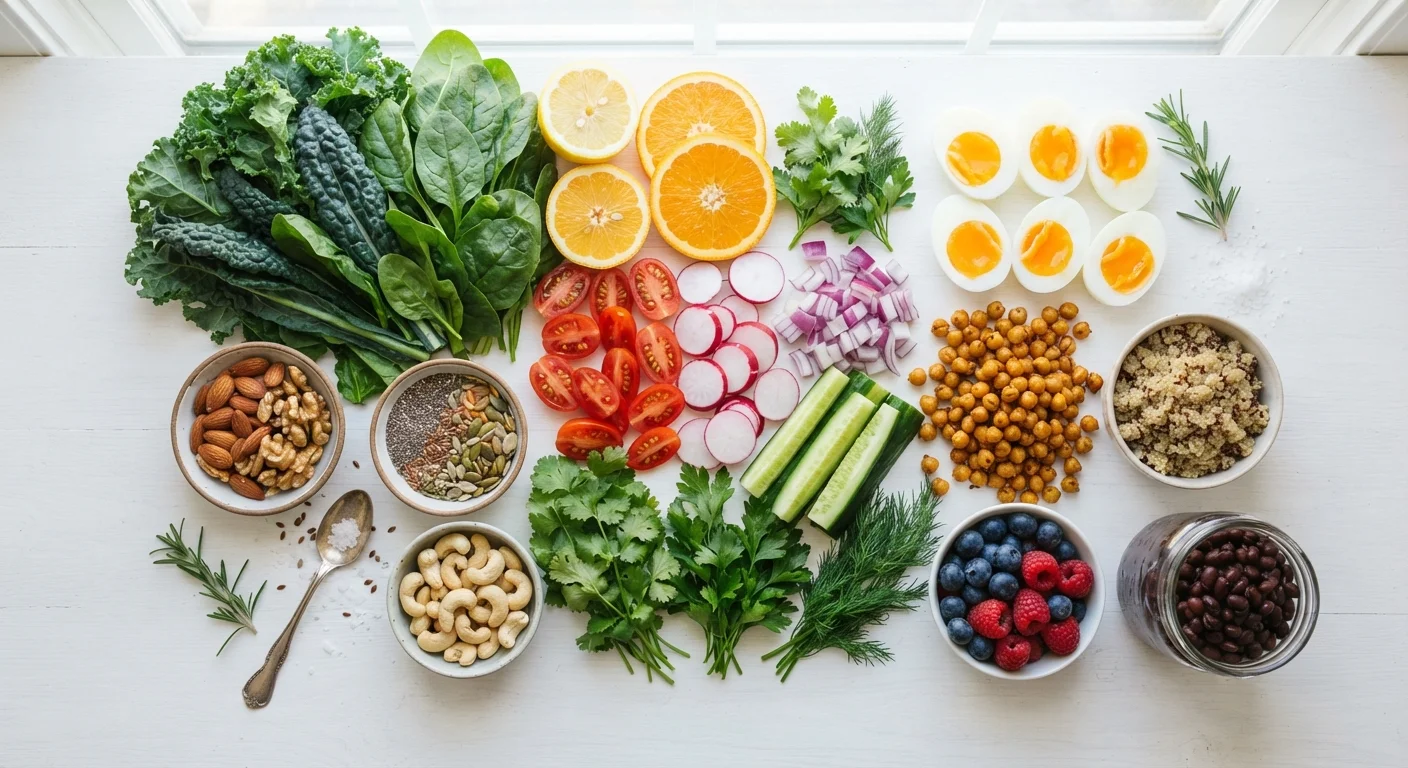
Photo credit: InGlimpse.com | Where Curiosity Finds Answers
In this article
A straightforward reference covering key vitamins and minerals, what they do, and which foods naturally supply them.
What Are Micronutrients and Why Do They Matter?
Micronutrients is the umbrella term for vitamins and minerals — compounds your body needs in relatively small amounts but cannot function without. Unlike carbohydrates, protein, and fat (the macronutrients that supply energy), micronutrients drive the biochemical reactions that keep every organ system running. For a broader look at how macros and micros fit together, see our macronutrients explainer.
Vitamins are organic compounds, meaning they come from living sources — plants and animals. Minerals are inorganic elements drawn from soil and water. Both categories split further: vitamins are either fat-soluble (A, D, E, K — stored in body fat) or water-soluble (C and the B vitamins — excreted more readily). Minerals divide into macrominerals (needed in larger amounts, like calcium and magnesium) and trace minerals (needed in tiny quantities, like iron and zinc).
Deficiencies can be subtle at first — fatigue, slow wound healing, or frequent illness — so understanding which foods supply which nutrients is practical knowledge, not just academic.
Micronutrient
A vitamin or mineral required by the body in small amounts to support growth, immune function, and metabolic processes. Unlike macronutrients, micronutrients do not supply calories.
Fat-soluble vitamin
Vitamins A, D, E, and K, which dissolve in fat and can be stored in the body's fatty tissues. Because they accumulate, excessive supplementation carries a higher risk than with water-soluble vitamins.
Water-soluble vitamin
Vitamins C and the B vitamins, which dissolve in water and are generally excreted through urine when consumed in excess. The body stores little of these, so regular dietary intake is important.
Daily Value (DV)
A reference amount set by the FDA used on Nutrition Facts labels to indicate how much of a nutrient a serving of food provides relative to general daily needs. It is a guide, not a personalized target.
Bioavailability
The proportion of a nutrient that the body actually absorbs and can use. Bioavailability varies by food source, preparation method, and what else is eaten at the same time.
Trace mineral
A mineral the body requires only in very small amounts — such as zinc, selenium, or iodine — but that is still essential for specific biochemical functions.
Key Vitamins: Functions and Food Sources
The table below distills what each major vitamin does and where to find it in everyday foods.
| Vitamin | Primary Role | Common Food Sources |
|---|---|---|
| A | Vision, immune function, skin integrity | Sweet potato, carrots, leafy greens, liver |
| C | Collagen synthesis, antioxidant, immune support | Citrus, bell peppers, broccoli, strawberries |
| D | Calcium absorption, bone health, immune regulation | Fatty fish, fortified dairy, egg yolks; skin synthesis via sunlight |
| E | Antioxidant, cell membrane protection | Sunflower seeds, almonds, vegetable oils, spinach |
| K | Blood clotting, bone metabolism | Kale, broccoli, Brussels sprouts, fermented foods |
| B1 (Thiamine) | Energy metabolism, nerve function | Pork, whole grains, legumes |
| B12 | Red blood cell formation, neurological function | Meat, fish, dairy, eggs; fortified plant foods |
| Folate (B9) | DNA synthesis, cell division | Leafy greens, beans, fortified grains, citrus |
If you regularly read packaged food labels, you've likely seen these vitamins listed as percentages of a Daily Value — our Nutrition Facts label guide explains exactly what those numbers mean.
Essential Minerals: What They Do and Where to Get Them
Minerals are structural (calcium in bones) and regulatory (potassium in nerve signaling). The ones adults are most commonly short on include calcium, magnesium, potassium, and iron.
| Vitamins classified as fat-soluble | A, D, E, K |
| Vitamins classified as water-soluble | C and the eight B vitamins |
| Most common mineral deficiency globally | Iron deficiency (World Health Organization) |
| Vitamin D synthesis source | UVB sunlight exposure on skin |
| Non-heme iron absorption booster | Vitamin C consumed at the same meal (Established nutritional science) |
| B12 absorption challenge | Requires intrinsic factor produced in the stomach |
| Mineral | Primary Role | Common Food Sources |
|---|---|---|
| Calcium | Bone and tooth structure, muscle contraction | Dairy, fortified plant milks, tofu, sardines |
| Iron | Oxygen transport in red blood cells | Red meat, beans, lentils, fortified cereals, spinach |
| Magnesium | Muscle and nerve function, energy production | Nuts, seeds, dark chocolate, whole grains, legumes |
| Potassium | Fluid balance, blood pressure regulation | Bananas, potatoes, avocados, beans |
| Zinc | Immune function, wound healing, protein synthesis | Oysters, beef, pumpkin seeds, chickpeas |
| Iodine | Thyroid hormone production | Iodized salt, seafood, dairy |
| Selenium | Antioxidant defense, thyroid function | Brazil nuts, tuna, eggs, whole grains |
Note that plant-based sources of iron (non-heme iron) are absorbed less efficiently than animal sources (heme iron). Consuming vitamin C alongside non-heme iron — for example, lemon juice on lentils — is a well-supported strategy for improving absorption.
Plant-Based Diets and Mineral Absorption
Whole plant foods contain compounds called phytates and oxalates that can bind to certain minerals — including iron, calcium, and zinc — and reduce their absorption. Soaking, fermenting, or cooking legumes and grains can help reduce phytate content. People following exclusively plant-based diets may benefit from discussing micronutrient status with a registered dietitian or healthcare provider.
Filling Gaps Safely: Diet First, Supplements Second
Nutrition research consistently shows that nutrients in whole foods come packaged with fiber, phytonutrients, and cofactors that work together — benefits that isolated supplements typically cannot fully replicate. A varied diet drawing from vegetables, fruits, whole grains, legumes, nuts, and lean proteins covers most adults' needs.
That said, certain groups do have documented higher risk for specific shortfalls:
- Vitamin D: People with limited sun exposure, darker skin, or older adults may have lower synthesis.
- B12: Adults following a vegan or strict vegetarian diet need reliable dietary sources or supplementation.
- Folate: People who are pregnant or planning pregnancy — consult a healthcare provider.
- Iron: Premenopausal women and athletes have higher requirements; status is best checked through blood work.
Before starting any supplement, it's worth talking with a qualified healthcare professional. Fat-soluble vitamins (A, D, E, K) can accumulate to problematic levels, and high-dose mineral supplements can interfere with absorption of other nutrients.
If you're just beginning to think about nutrition more intentionally, our beginners' nutrition guide is a practical starting point.
This article is for general informational purposes only and is not a substitute for personalized medical or dietary advice. Consult a qualified healthcare professional before making significant changes to your diet or starting any supplement regimen.

Author
Health Editorial Team
Health Editorial Team is the collective byline for our editorial team and contributor network. Articles published under this byline or an editorial pen name are researched, written, and reviewed according to our editorial standards for clarity, consistency, and independence before publication.
View all articles →