
The 50/30/20 Rule Explained
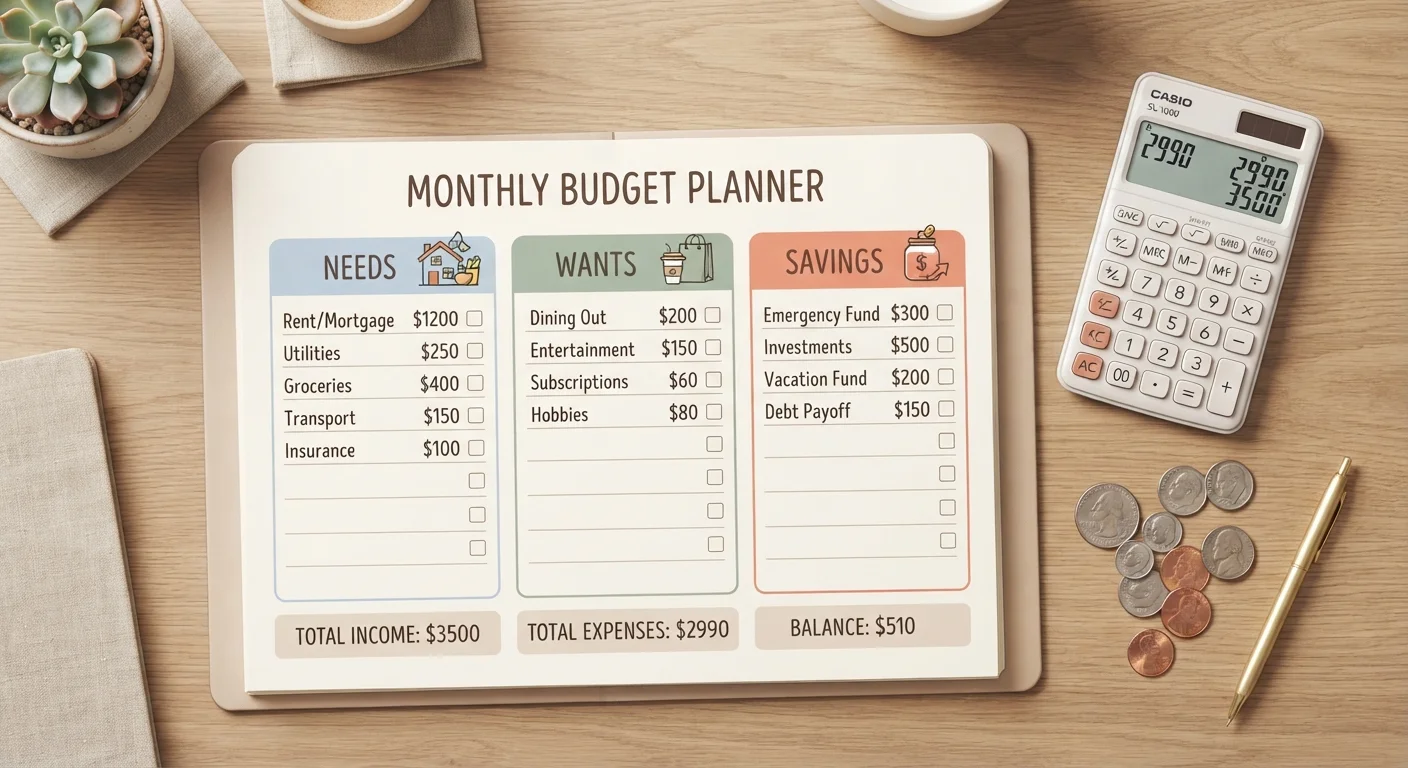
Photo credit: InGlimpse.com | Where Curiosity Finds Answers
In this article
Learn how the 50/30/20 budgeting framework divides your income into needs, wants, and savings — and when it works best.
Key Takeaways
- The 50/30/20 rule splits after-tax income into needs (50%), wants (30%), and savings or debt repayment (20%).
- It works best as a starting framework, not a rigid prescription — adjustments are often necessary.
- High-cost-of-living areas may make the 50% needs target difficult to achieve without modification.
- The 20% savings category should include both emergency fund contributions and retirement savings.
- Tracking actual spending against these percentages reveals where budget drift is happening.
How the Three Categories Work
Understanding the 50/30/20 rule starts with correctly identifying what belongs in each category. To get started, calculate your monthly after-tax income — this is your take-home pay after all withholdings. Then apply the three percentages to that figure.
50% — Needs
Needs are non-negotiable expenses required to live and work. Common examples include rent or mortgage payments, utilities, groceries, health insurance premiums, minimum loan payments, and transportation costs. The test is straightforward: would skipping this expense cause serious harm or legal or financial consequence? If yes, it's a need.
30% — Wants
Wants are lifestyle expenses that add comfort or enjoyment but aren't essential for basic functioning. Restaurant meals, entertainment subscriptions, travel, and hobbies all fit here. This category is where most people have the most flexibility — and where the easiest spending cuts can be found when money is tight.
20% — Savings and Debt Repayment
This category covers contributions to an emergency fund, retirement accounts such as a 401(k) or IRA, and extra payments toward debt beyond the required minimum. Treating saving as a fixed budget line — rather than whatever is left over — is a core principle of building long-term financial security. For a deeper look at why this structure matters, see how to build saving into your budget from the start.
Make the 20% Automatic
Set up an automatic transfer to your savings or retirement account on payday — before you have a chance to spend it. Automating the 20% allocation removes the willpower variable and ensures saving happens consistently, not just in months when you feel disciplined.
When the 50/30/20 Rule Works — and When It Doesn't
The 50/30/20 framework is well-suited for people with a stable, predictable income who want a simple structure without tracking every transaction. It provides enough guardrails to prevent overspending without requiring the granular discipline of a zero-based budget.
However, the framework has real limitations. Readers in high-cost metro areas — where rent alone can consume more than 50% of take-home pay — may find the needs target structurally impossible to hit. Similarly, households carrying significant high-interest debt may benefit from temporarily shifting more than 20% toward repayment before focusing on savings growth. Managing those trade-offs effectively is part of the broader world of credit and debt management.
The rule also becomes harder to apply when income is irregular, such as for freelancers or gig workers, who face month-to-month variability that a fixed percentage approach doesn't easily accommodate.
57%
Americans living paycheck to paycheck
According to a widely cited LendingClub and PYMNTS survey, more than half of U.S. consumers report spending all or nearly all of their income each month, underscoring the need for structured budgeting frameworks.
20%
Recommended minimum personal savings rate
The 50/30/20 rule's savings target aligns with guidance from many financial planning organizations, which generally recommend saving at least 15–20% of income for long-term financial security.
34%
Americans with no emergency savings
A Bankrate survey found that roughly one in three Americans had no emergency fund savings at all, highlighting a gap the 20% savings category of this framework directly addresses.
Applying the Rule to Your Own Budget
Putting the 50/30/20 rule into practice is straightforward. Start by calculating your monthly after-tax income, then multiply it by 0.50, 0.30, and 0.20 to find your target dollar amounts for each category. Next, review your actual spending from the past two or three months — bank statements and card transactions are reliable sources — and sort each expense into the three categories.
The gap between your actual spending and your 50/30/20 targets reveals where to focus. If your needs are running above 50%, look for specific costs to reduce: renegotiating a phone plan, refinancing a loan, or cutting an automatic subscription. If your savings rate is below 20%, even small automatic transfers to a dedicated savings account help build the habit. A structured monthly budget review helps you catch drift early before small variances compound into larger shortfalls.
The 50/30/20 rule is one of several widely used approaches. If you want to evaluate whether it's the right fit for your situation, comparing it to other budgeting methods provides a useful side-by-side perspective. And if you're newer to thinking about how income, expenses, and savings interact, understanding where your money actually goes is a helpful foundation.
Ratios Are a Starting Point, Not a Rule
The 50/30/20 percentages are a widely used guideline, not a universal prescription. Your income level, family size, geographic location, and financial goals all affect what the right split looks like for you. Use the framework as a diagnostic tool — if the numbers don't fit cleanly, that itself tells you something useful about your financial picture.
This article is for general informational and educational purposes only and does not constitute personalized financial advice. Consult a qualified financial professional for guidance specific to your situation.
Frequently Asked Questions

Author
Finance Editorial Team
Finance Editorial Team is the collective byline for our editorial team and contributor network. Articles published under this byline or an editorial pen name are researched, written, and reviewed according to our editorial standards for clarity, consistency, and independence before publication.
View all articles →