
Selling or Trading In Your Car: How the Two Options Compare
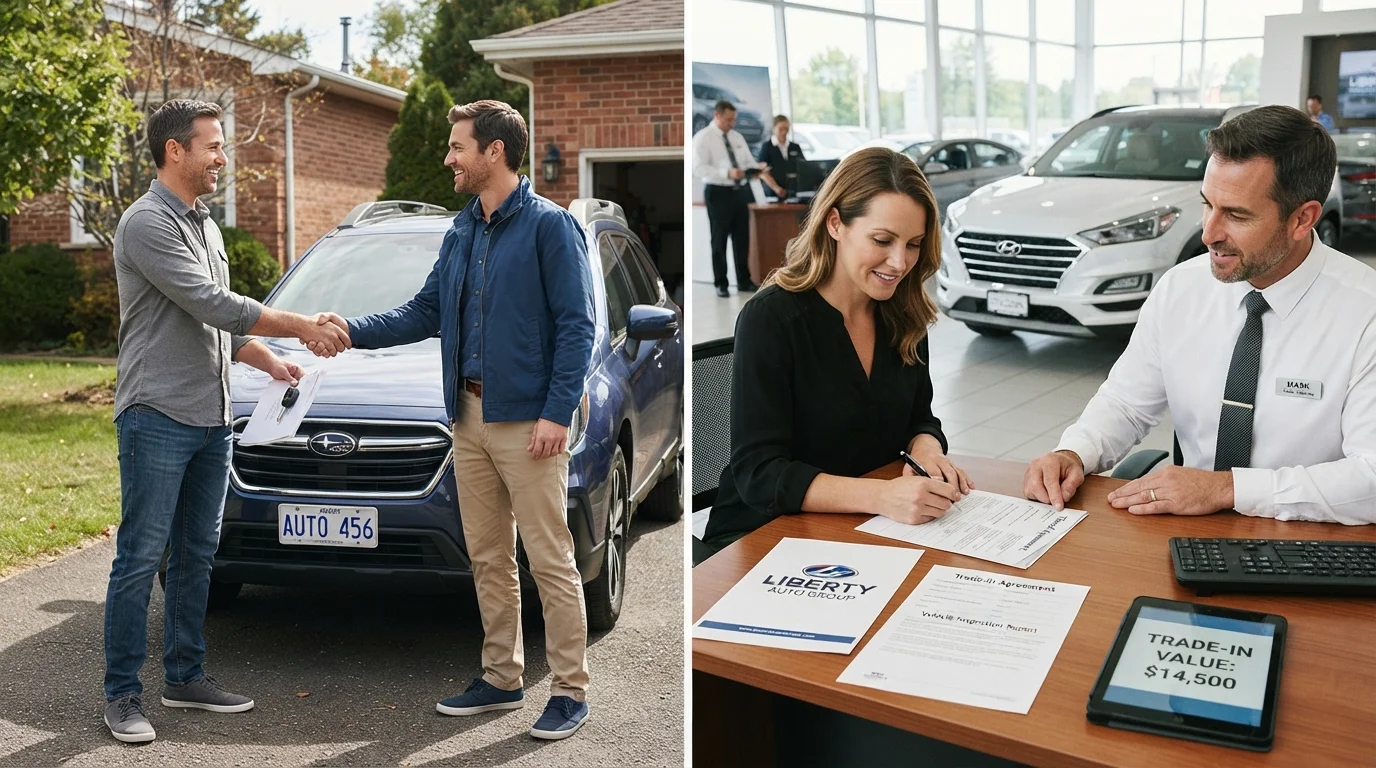
Photo credit: InGlimpse.com | Where Curiosity Finds Answers
In this article
Selling privately and trading in at a dealership involve very different processes. Here's how to think through which route makes sense for you.
Key Takeaways
- Private sales typically yield more money but require more time, effort, and patience from the seller.
- Trade-ins are faster and more convenient but usually result in a lower payout than selling privately.
- Your financial situation, timeline, and tolerance for negotiation should drive the decision.
- Knowing your car's market value before either transaction is essential to avoid leaving money on the table.
- Tax advantages at the point of a new-car purchase can partially offset a trade-in's lower payout in some states.
The Core Difference Between Selling and Trading In
When it's time to move on from your current vehicle, you have two primary options: sell it privately to another individual, or trade it in at a dealership — typically when buying your next car. On the surface, both accomplish the same thing. In practice, they involve very different processes, timelines, and financial outcomes.
A private sale means you handle the transaction directly with a buyer. You set the price, negotiate, manage paperwork, and transfer the title yourself. A trade-in means the dealership takes your car off your hands — usually as a credit toward another vehicle — handling most of the administrative work for you.
If you're new to the process, it helps to understand what you're taking on with each route before you commit. For context on the broader costs of vehicle ownership that may inform your timing, see the full picture of car ownership costs.
How the Two Options Stack Up
The table below compares private sales and trade-ins across the factors that matter most to most drivers.
| Private Sale | Trade-In | |
|---|---|---|
| Typical payout | Higher — closer to retail value | Lower — closer to wholesale value |
| Time required | Days to weeks | Same day in most cases |
| Effort involved | High — listing, showing, negotiating | Low — dealer handles most steps |
| Paperwork burden | Seller manages title transfer | Dealer handles the paperwork |
| Sales tax benefit | None | Tax credit in most states |
| Risk factors | Scam exposure, payment fraud | Low offer if not negotiated |
| Best fit | Sellers prioritizing maximum return | Buyers prioritizing speed and ease |
The price gap between a private sale and a trade-in offer can vary considerably depending on the vehicle, its condition, local market demand, and the dealership. It's worth getting a sense of your car's current market value — through tools like independent vehicle valuation services — before pursuing either route.
The Case for Selling Privately
Private sales generally yield a higher return because you're selling at retail or near-retail value rather than wholesale. Dealerships need to account for reconditioning costs, lot fees, and their own profit margin when they make a trade-in offer — a private buyer doesn't have those same constraints.
The trade-off is real, though. You'll need to:
- Prepare and photograph the vehicle for listings
- Respond to inquiries, schedule viewings, and handle test drives
- Negotiate price and terms with buyers directly
- Manage the title transfer and any bill of sale documentation required in your state
- Protect yourself from scams, particularly with payment verification
Get Multiple Offers Before You Decide
Before accepting a trade-in offer or committing to a private sale price, gather a few reference points. Some dealers and third-party services will provide written trade-in estimates without requiring a purchase. Comparing these against private-market listings for similar vehicles gives you a clearer sense of the actual gap — and stronger leverage if you negotiate.
For vehicles in strong condition or models with high retail demand, the extra effort can be worth it — potentially thousands of dollars more than a dealer's offer. For older vehicles with mechanical issues, that gap may be smaller and the effort harder to justify.
The Case for Trading In
The appeal of a trade-in is straightforward: the dealership handles the bulk of the transaction. You bring in the car, receive an offer, and apply it toward your next purchase — often on the same day. There's no waiting for a buyer, no strangers test-driving your vehicle, and no paperwork you have to file yourself.
There's also a tax angle worth understanding. In many U.S. states, you only pay sales tax on the difference between the trade-in value and the price of your new vehicle, not the full purchase price. Depending on the value of your car and the applicable state sales tax rate, this credit can meaningfully close the gap between what a dealer offers and what you might get privately.
Trade-ins also make sense when speed matters — if you're relocating, dealing with a financial transition, or simply don't have the bandwidth to run a private sale. See our guide on weighing your next vehicle purchase for how a trade-in fits into the broader buying decision.
Don't Negotiate Trade-In and Purchase Price Together
When trading in at a dealership, try to negotiate the trade-in value and the price of your new vehicle as separate transactions. Bundling them can make it harder to tell whether you're getting a fair deal on either one. Dealers may offer a more attractive trade-in figure while adjusting the purchase price upward to compensate.
Before You Decide: Know Your Car's Value
Whichever route you choose, walking in without knowing your car's approximate market value puts you at a disadvantage. Independent vehicle valuation resources can give you a reasonable baseline — look at both trade-in estimates and private-party values to understand the range you're working within.
Condition is a major variable. Mechanical problems, high mileage, accident history (visible on vehicle history reports), and cosmetic damage all reduce what a buyer or dealer will pay. Being realistic about your car's condition before you list or visit a dealer leads to fewer surprises and better decisions.
If you're a first-time seller or relatively new to the process, understanding the basics of car ownership transitions can help ground your expectations before diving in.

Author
Autos Editorial Team
Autos Editorial Team is the collective byline for our editorial team and contributor network. Articles published under this byline or an editorial pen name are researched, written, and reviewed according to our editorial standards for clarity, consistency, and independence before publication.
View all articles →