
Resource Guarding in Dogs: What It Is and How to Safely Respond
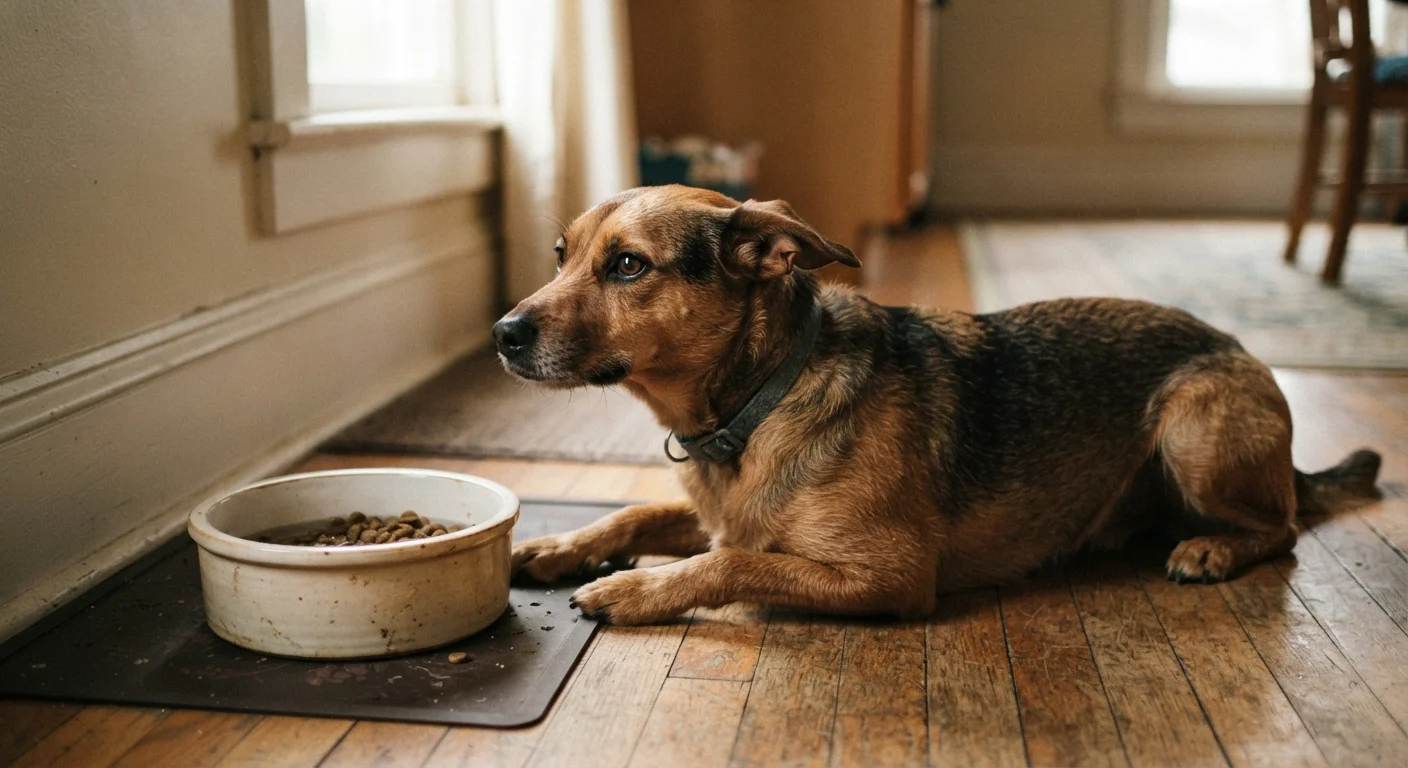
Photo credit: InGlimpse.com | Where Curiosity Finds Answers
In this article
When dogs protect food, toys, or space with growling or snapping, it's called resource guarding. Here's what drives it and how to address it thoughtfully.
Key Takeaways
- Resource guarding is a natural dog behavior, not a sign of dominance or bad character.
- Punishing a guarding dog can suppress warning signals and increase the risk of biting.
- Early, mild guarding is easier to address than entrenched, escalating behavior.
- Techniques like trading and counter-conditioning can reduce guarding over time.
- Severe guarding toward people, especially children, warrants professional guidance from a certified behaviorist.
Why Dogs Guard Resources
Resource guarding makes intuitive sense from an evolutionary standpoint. Dogs descended from animals that competed for food and shelter, so protecting high-value items was adaptive. Even in a safe, well-fed home, those instincts can still surface.
The behavior is not about spite or stubbornness. Most guarding dogs are operating from a place of anxiety — they're worried that something valuable will disappear. This is why understanding the motivation matters before choosing a response.
Guarding exists on a spectrum. A dog that freezes briefly over its bowl when someone walks by is showing a very different level of concern than one that snaps when approached. Recognizing where a dog falls on that spectrum is the first step toward addressing it safely. You can also learn more about how fear and stress manifest in dogs by reading how fear-based behavior patterns develop.
Guarding Is Not About Dominance
It's a persistent myth that resource guarding reflects a dog trying to be the "alpha" or assert dominance over its owner. Current behavioral science does not support dominance theory as an explanation for most household dog behaviors. Guarding is better understood as a fear-based or anxiety-driven response — which is why compassionate, low-pressure approaches tend to work far better than confrontational ones.
Recognizing the Warning Signs
Dogs typically signal discomfort before escalating to a bite. Learning to read these early signals helps owners intervene before situations become dangerous. Common resource guarding cues include:
- Stiffening of the body — the dog goes still when someone approaches
- Hard eye — a fixed, intense stare directed at a perceived threat
- Lip curling or showing teeth — a clear visual warning
- Growling — an audible signal that should never be punished, as it is communication
- Snapping or lunging — escalated responses when earlier signals were missed or ignored
A dog that used to growl but has stopped may not have improved — it may have learned that growling led to punishment, which can make biting more likely without warning. Maintaining respect for those early signals is critical for household safety.
For a broader look at how dogs communicate discomfort, see our guide on how pets show stress and what's usually behind it.
~44%
Dogs showing some form of resource guarding
Research published in Applied Animal Behaviour Science has found that a substantial minority of pet dogs display guarding behavior toward people in at least one context.
~20%
Shelter dogs guarding food from people
Studies of shelter dog populations have found food guarding to be among the more commonly observed agonistic behaviors, with estimates varying by population and assessment method.
Safe and Effective Ways to Respond
The goal of addressing resource guarding is not to "win" the item from the dog, but to change how the dog feels about people approaching its resources. Two core strategies used by behavioral professionals include:
The Trade Game
Offer the dog something it values equally or more in exchange for what it has. For example, calmly presenting a high-value treat while saying "trade" can teach the dog that a human approaching means something good is coming — not that something will be taken away. Over time, this shifts the emotional response from anxiety to anticipation.
Counter-Conditioning
This involves systematically pairing your approach with positive outcomes, gradually reducing the dog's defensive response. It works best when started at a distance that doesn't yet trigger guarding, and built up slowly. Consistency matters more than frequency in the short term.
Practice Trades Before You Need Them
Build the trade habit during calm, everyday moments — not just when you need to retrieve something. Offer a treat in exchange for a toy the dog willingly gives up, then return the toy. This teaches the dog that trading doesn't always mean losing the item permanently, making real-world trade scenarios much smoother.
What to avoid: Never reach over or into a dog's space to forcibly take a resource. Avoid staring the dog down or using physical corrections. These approaches are likely to escalate tension and erode trust. They can also suppress the early warning signals that keep people safe.
If guarding is directed at other pets in the home, management strategies — such as separate feeding stations — are often the most practical first step.
When to Involve a Professional
While mild resource guarding can often be managed with patience and consistent training techniques, some situations call for expert guidance. Consider reaching out to a certified professional dog trainer (CPDT-KA) or a veterinary behaviorist if:
- The dog has snapped at or bitten a person
- Children are regularly exposed to the guarding dog
- Guarding is escalating despite your management efforts
- The behavior appeared suddenly in a previously calm dog
That last point is worth emphasizing. A sudden change in guarding behavior — especially in an older dog — can sometimes reflect pain or illness rather than a purely behavioral issue. It's worth a veterinary check-up to rule out physical causes. Our article on when behavior changes may signal a medical issue covers this in more detail.
Resource guarding is a manageable challenge for most households. With accurate information, realistic expectations, and professional support when needed, most dogs can be helped to feel — and behave — more secure around the things they value.
This article is for general informational purposes only and does not constitute professional veterinary or behavioral advice. Consult a qualified veterinary professional or certified animal behaviorist for guidance specific to your dog's situation.
Frequently Asked Questions

Author
Pets Editorial Team
Pets Editorial Team is the collective byline for our editorial team and contributor network. Articles published under this byline or an editorial pen name are researched, written, and reviewed according to our editorial standards for clarity, consistency, and independence before publication.
View all articles →