
The Insurance Declaration Page: What Every Section Is Telling You
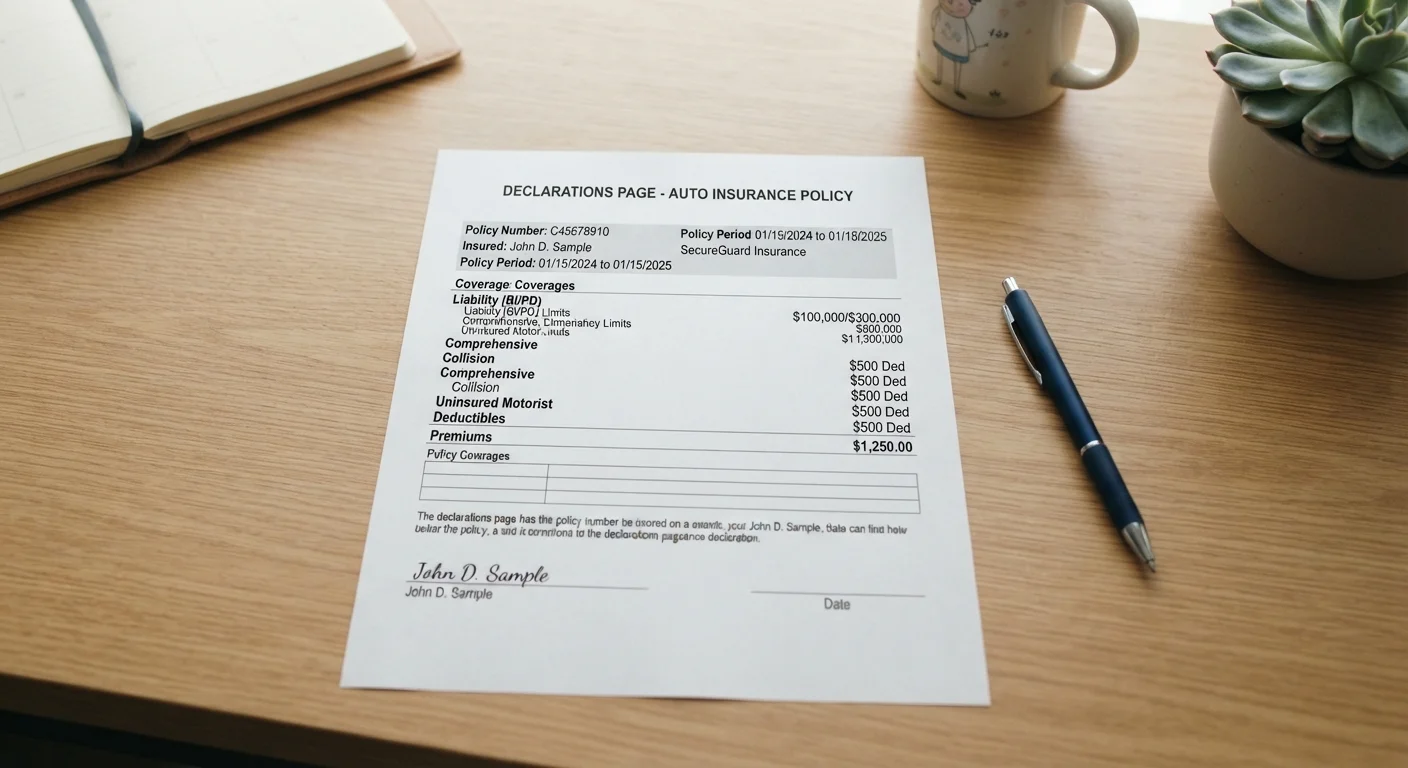
Photo credit: InGlimpse.com | Where Curiosity Finds Answers
In this article
Your declarations page summarizes your entire policy — here's how to read each field and why it matters when you need to file a claim.
Key Takeaways
- The declarations page summarizes your entire policy on one or two pages — it is not the full policy.
- Named insured and additional insured fields determine who is legally protected under the coverage.
- Coverage limits and deductibles on the dec page directly affect what you'll receive after a claim.
- The policy period dates define exactly when your coverage is active — gaps can leave you unprotected.
- Endorsements listed on the dec page indicate modifications that expand or restrict standard coverage.
- Always review your dec page at renewal to confirm coverage details haven't changed unexpectedly.
What the Declarations Page Actually Is
When your insurer sends you a policy package, the declarations page is the first thing inside. It's typically one to two pages and reads more like a data sheet than legal text — because that's exactly what it is. Every field on it corresponds to a binding term in your contract.
The dec page doesn't stand alone. It connects to the broader policy, which spells out exclusions, definitions, and conditions in detail. If you're new to reading insurance documents, the full policy walkthrough explains how the dec page fits into the bigger picture. For a broader foundation, understanding insurance from the ground up is a useful starting point.
The Dec Page Is Not the Entire Policy
It's common to assume that if something isn't listed on the declarations page, it isn't part of your coverage. That's not accurate. The dec page summarizes key terms, but exclusions, definitions, and conditions are found only in the full policy document. When in doubt about what's covered, consult the complete contract — not just the dec page.
The Key Fields — and What Each One Means
Breaking the dec page into its core sections makes it far less intimidating.
Policy Number
This is your unique identifier with the insurer. You'll need it for every call, claim, or written correspondence. Keep it accessible.
Policy Period
Two dates — the start and end of your coverage window. Coverage applies only within this period. A lapse between policies, even by a single day, can mean no protection during that gap.
Named Insured and Additional Insureds
The named insured is the primary policyholder. Additional insureds — a spouse, co-owner, or lienholder — may also appear. Only those listed have formal rights under the policy. This field matters enormously at claim time.
Insured Property or Vehicles
For home or auto policies, the dec page describes what's being covered: a property address with construction type, or a vehicle's year, make, model, and VIN. If this information is inaccurate, correct it promptly — errors here can complicate claims.
Coverage Types and Limits
This section lists each coverage category (liability, collision, comprehensive, dwelling, personal property, etc.) alongside the maximum dollar amount the insurer will pay per occurrence or in total. Understanding these limits is critical — see the insurance claims glossary for definitions of specific terms you may encounter here.
Deductibles
Each coverage line may carry its own deductible. Higher deductibles generally mean lower premiums but more out-of-pocket cost when you file a claim.
Premium
The total amount you owe for the policy period, sometimes broken into installment amounts. Confirm this matches what you're actually being charged.
Endorsements and Riders
Endorsements are modifications to the standard policy — additions or restrictions. They're listed by name or form number on the dec page. A scheduled endorsement might add coverage for a specific piece of jewelry; an exclusion endorsement might remove flood protection. Review these carefully, especially at renewal. The renewal jargon guide can help decode changes that appear year over year.
1 in 3
Policyholders who misunderstand their coverage limits
A survey by the Insurance Information Institute found that roughly one-third of homeowners are uncertain about what their policy actually covers.
~2 pages
Typical length of a declarations page
Despite summarizing a contract that can run 30–60 pages, most dec pages condense all critical policy data onto one to two pages.
Why Getting This Right Before a Claim Matters
Most people file their dec page and forget it — until something goes wrong. At that point, every field becomes consequential. A coverage limit that seemed adequate may fall short of actual repair costs. A missing name in the insured section may disqualify a claimant. An endorsement you didn't notice may exclude the exact event you're claiming.
The time to understand your dec page is before you ever need to use it. When you receive a new or renewed dec page, treat it as a document worth 15 minutes of careful reading. Compare it to the prior period's version if you have it. If anything looks unfamiliar — an endorsement you don't recognize, a limit that changed — contact your agent for an explanation.
Do a Coverage Checkup at Every Renewal
When your renewal dec page arrives, place it side by side with the prior year's version. Look for changes in coverage limits, deductibles, listed endorsements, and premium amounts. If anything shifted that you didn't request, ask your agent to explain it in writing before the new policy period begins.
For context on the difference between a dec page and other insurance documents you may receive — such as certificates of insurance — the certificate of insurance guide walks through that distinction clearly. And if your policy includes terms you're encountering for the first time, insurance terms for first-time policyholders is a practical reference.
This article is for general informational purposes only and does not constitute insurance, legal, or financial advice. Coverage terms, limits, and exclusions vary by insurer and state. Always read your full policy documents and consult a licensed insurance professional for guidance specific to your situation.
Frequently Asked Questions

Author
Insurance Editorial Team
Insurance Editorial Team is the collective byline for our editorial team and contributor network. Articles published under this byline or an editorial pen name are researched, written, and reviewed according to our editorial standards for clarity, consistency, and independence before publication.
View all articles →