
The Complete Framework for Evaluating Any Purchase Decision
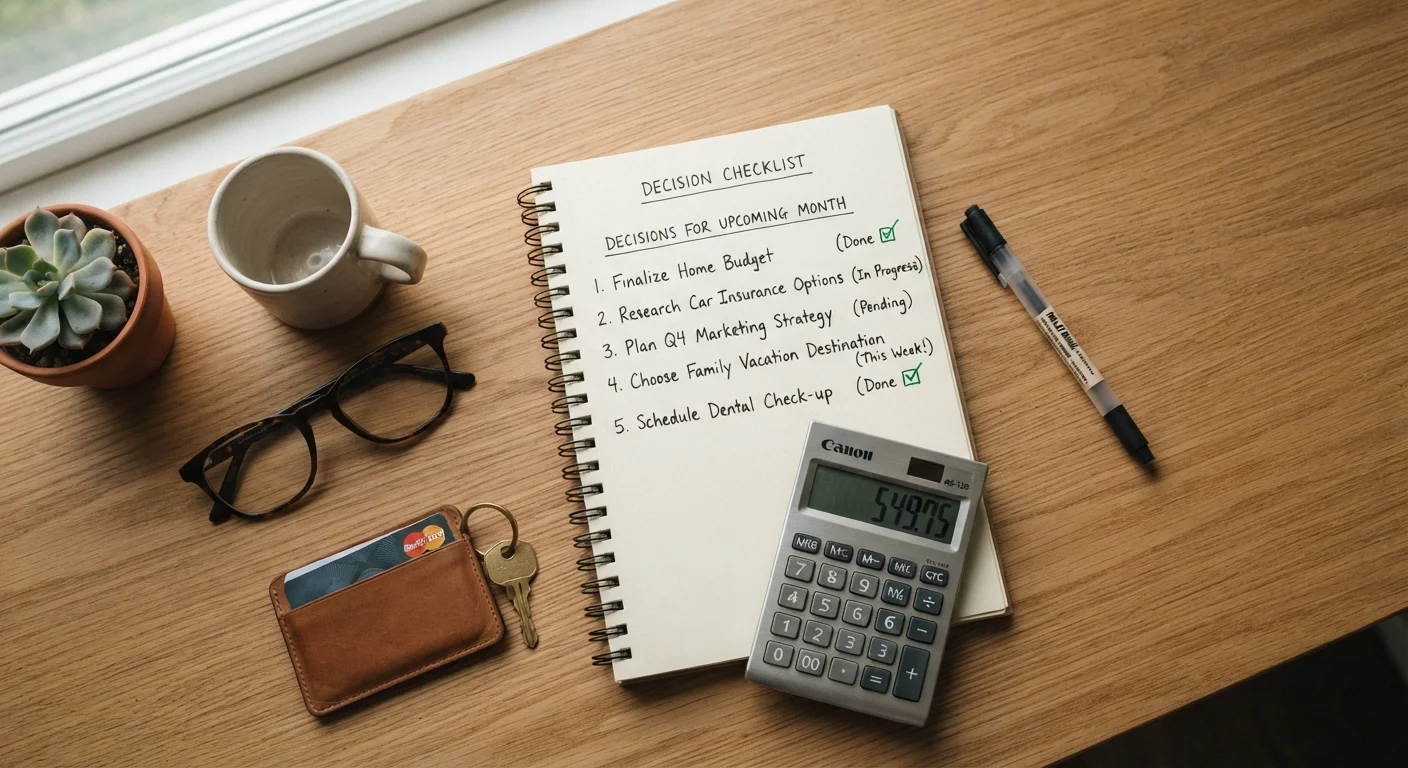
Photo credit: InGlimpse.com | Where Curiosity Finds Answers
In this article
From need assessment to post-purchase review, this guide walks through every stage of a thoughtful buying decision — for products of any size or cost.
Key Takeaways
- Identifying a genuine need before browsing prevents impulse-driven regret.
- Your realistic budget should account for ongoing costs, not just sticker price.
- Structured comparison of a few options beats exhaustive research of dozens.
- Total cost of ownership often exceeds the purchase price by a meaningful margin.
- A brief post-purchase review turns one decision into better future decisions.
Why a Framework Matters for Any Purchase
Most purchasing regret doesn't come from choosing the wrong product — it comes from skipping the early steps entirely. Impulse buying, social pressure, and marketing friction all conspire to move consumers past their own judgment. A repeatable framework interrupts that pattern.
This guide applies to purchases of any size: a new appliance, a piece of furniture, pet supplies, or even a subscription service. The stages scale up or down in depth depending on the stakes, but the structure stays the same. If you're also building out your financial foundation, our introduction to personal budgeting provides useful context for how purchase decisions fit into a broader spending plan.
~33%
Purchases consumers report regretting
Multiple consumer surveys over recent years have consistently found that roughly one in three purchases leads to some degree of buyer's remorse, most often linked to impulse buying.
2–3x
Lifetime cost vs. purchase price ratio for appliances
Consumer energy and maintenance analyses suggest that the total operating cost of a major appliance over its lifespan can be two to three times the original retail price.
Step 1: Clarify the Real Need
Before looking at any product, answer one question plainly: what problem am I actually solving? This sounds obvious, but conflating wants with needs is the most common entry point for buyer's remorse.
Write down the specific gap or problem in one sentence. Then ask whether anything you already own could address it. If the answer is yes, the purchase may be premature. If the answer is no, you've confirmed a genuine need — and that clarity will guide every step that follows.
Write the problem down before searching for a product. If you can't describe the gap in one sentence, you're not ready to buy.
Vague needs lead to vague purchases. A concrete problem statement acts as a filter that prevents you from solving the wrong thing with spending.
Impose a 48-hour pause between identifying a want and taking any action on it. This alone eliminates most impulse purchases without requiring willpower in the moment.
Behavioral research consistently shows that a cooling-off period reduces impulse spending; the desire for many non-essential items drops significantly after even a short delay.
For purchases that affect health or safety — such as evaluating pet food options — the need-clarification step also includes understanding relevant quality standards, not just personal preference.
Step 2: Set an Honest Budget
A budget for a purchase isn't just a ceiling — it's a commitment to your other financial priorities. Before you settle on a number, check what your current spending plan actually allows. For a deeper look at how to structure that, see where your money currently goes.
Set a realistic range, not a single figure. The floor represents what a functional, adequate option typically costs; the ceiling is what you can spend without displacing something else. Resist anchoring to the upper limit just because you've defined it.
Use a Range, Not a Hard Number
Setting a budget floor and ceiling — rather than a single figure — keeps you realistic without cutting off genuinely good options just above an arbitrary limit. It also prevents the common habit of treating the ceiling as a target rather than a maximum.
Step 3: Research and Compare Options
Narrowing to two or three genuine candidates is more productive than browsing indefinitely. Start with your defined need and budget range, then identify options that meet both. From there, compare on a short list of criteria that actually matter to your use case — not every feature on the spec sheet.
Useful research sources include owner reviews focused on long-term use (not just initial impressions), independent testing organizations, and category-specific guidance. For home equipment decisions, our home appliances hub covers what to weigh when evaluating major household purchases.
“The most important question to ask about any purchase is not 'Can I afford this?' but 'Have I chosen this deliberately?' Deliberate decisions, even imperfect ones, tend to produce far less regret than reactive ones.”
— Home Editorial Team, Editorial perspective based on consumer decision-making research
Once you've done enough research to feel informed — not exhaustive — stop. Decision fatigue is real, and additional information past a certain point rarely changes the outcome.
Step 4: Evaluate Total Cost of Ownership
Sticker price is only part of the cost picture. Total cost of ownership (TCO) includes installation, maintenance, consumables, energy use, insurance implications, and eventual disposal or replacement. A lower upfront price can easily become a higher lifetime cost.
For major appliances, for example, annual energy consumption is a meaningful line item over a ten-year lifespan. For a vehicle, it would include fuel, insurance, registration, and routine service. Build a simple estimate for each option you're comparing — a rough calculation that covers at least the first two to three years is often enough to reveal meaningful differences.
Don't Skip the Total Cost Estimate
Skipping the TCO step is the most common reason a 'good deal' turns into an ongoing financial drain. Even a rough estimate — done in five minutes — frequently reveals that the lower-priced option costs more over time. This step is especially important for appliances, vehicles, subscriptions, and any purchase with recurring costs.
Step 5: Decide and Review After Purchase
Once you've completed the prior steps, the decision itself should feel straightforward. If it doesn't, that's useful data — it may signal a genuine constraint you haven't resolved, such as budget pressure or an unconfirmed need. Don't rush past that discomfort.
After you've made the purchase and used the item for several weeks, do a brief review: Did it solve the problem? Did it perform as expected? Were there costs or friction you didn't anticipate? This pre-purchase checklist for online orders can also serve as a useful companion before you confirm any future digital transaction.
These notes — even informal mental notes — sharpen your framework for the next decision. Over time, the process becomes faster without becoming less rigorous. For anyone managing finances carefully, this habit pairs well with a complete personal budgeting approach that tracks where discretionary spending actually lands.
This article is for general informational and educational purposes only and does not constitute financial, legal, or professional advice. Readers should assess their own circumstances and consult qualified professionals where appropriate.

Author
Home Editorial Team
Home Editorial Team is the collective byline for our editorial team and contributor network. Articles published under this byline or an editorial pen name are researched, written, and reviewed according to our editorial standards for clarity, consistency, and independence before publication.
View all articles →